Lesbian-Gay-Bi-Sexual-Transgender issues in Cuba
An on-going project.
Please send links to other materials on this theme
which can be added to this page.
Spanish-literate readers who'd like to help
bring this material out in English, we can use your help and
we'll pay you in
boundless gratitude. Desafortunadamente, nada mas en este momento...
At the bottom of this page you will find extended comments
by Fidel Castro
on homosexuality, made in 1965, 1992, and 2006.
Please write with ideas, links, corrections and translations:
Walter Lippmann
walterlx@earthlink.net
http://www.motherjones.com/media/2014/05/transcuba-transgender-photos-cuba-castro
April 2014
http://www.cubacontemporanea.com/en/news/cuban-lgtb-literature
July 2013
La Partida - The Last Match (Trailer)
http://www.youtube.com/watch?v=x5EASd5FeIU
*wow!* - LOS ANGELES/*outfest*/Tues. July
19: "The Last Match"
http://groups.yahoo.com/group/CubaNews/message/142148
June 2013
PL reports on US gay marriage decision
http://groups.yahoo.com/group/CubaNews/message/141957
http://www.walterlippmann.com/docs3841.html
Mariela Castro: Socialism can not be homophobic (May 2013)
http://www.walterlippmann.com/docs3816.html
Cine Club Diferente celebrates its 5th
Anniversary (without barriers)
http://www.ipsnews.net/2013/06/gay-parents-in-cuba-demand-legal-right-to-adopt/
March 2013
Cuba to Host 6th Day Against Homophobia
http://www.plenglish.com/index.php?option=com_content&task=view&id=1245651&Itemid=1
From Taboo to Diversity
Mariela Castro, director of the National Center for Sex Education spoke
about how the policies and paradigms related to sex orientation and
education over the last fifty years have been shaped in Cuba
http://www.juventudrebelde.co.cu/cuba/2013-03-18/from-tabu-to-diversity/
Paquito: The Composition of the Cuban Parliament or When Homosexuality Stops
Being a “Private Affair”
http://www.walterlippmann.com/docs3664.html
This show is focused on a central theme: the homoerotic discourse through art,
in all its facets and extensions. The works are mostly unpublished. This time
some artists have been chosen who have usually addressed this erotic universe,
along with others whose work has not been distinguished by such an orientation,
and were challenged to embrace it.
http://www.juventudrebelde.co.cu/culture/2013-01-17/la-acacia-gallery-hosting-sex-in-the-city-exhibition/
November 2012
Cuba’s Transsexual City Council Member Adela and Her Strength to Resist

http://www.havanatimes.org/?p=82579
Cuban transexual elected to municipal government (Paquito, el de Cuba)
http://www.walterlippmann.com/docs3590.html
http://abcnews.go.com/International/wireStory/transgender-woman-1st-win-office-cuba-17740843#.UKbO4mfpU7c

Adela Hernandez, 48, poses for a photo in her home
in the village of Caibarien, Cuba, Friday, Nov. 16, 2012. (AP Photo/Ramon
Espinosa) (AP2012)
Read more:
http://latino.foxnews.com/latino/politics/2012/11/19/transsexual-wins-local-office-in-cuba/#ixzz2Co1ih79n
Juventud Rebelde: Across the mirror
http://www.walterlippmann.com/docs3582.html
Cuba: Socialized Medicine and the Fight Against AIDS
http://www.spartacist.org/english/wv/1010/cuba.html
http://groups.yahoo.com/group/CubaNews/message/136687
July 2012
http://jameslewisrn.com/glbt-travel
October 2012
http://latino.foxnews.com/latino/health/2012/10/27/cuba-has-done-20-sex-change-o\
perations-for-transsexuales/print#ixzz2AX4PvS3g
June 2012: CNN's Christiane Amanpour interviews Mariela Castro:
http://amanpour.blogs.cnn.com/2012/06/01/raul-castros-daughter-mariela-speaks-about-alan-gross-case/?iref=obinsite
http://www.cnn.com/video/?/video/international/2012/06/05/amanpour-mariela-castro-gay-rights-cuba.cnn#/video/international/2012/06/05/amanpour-mariela-castro-gay-rights-cuba.cnn
or:
bit.ly/KLsxCR
Eyewitness Cuba: March Against Homophobia celebrates new outlook
March Against
Homophobia Celebrates New Outlook in Cuba
http://www.granma.cu/ingles/cuba-i/24may-Homophobia.html
http://www.lgbtqnation.com/2012/05/cuban-lgbt-rights-activist-mariela-castro-espins-u-s-visit-stirs-controversy/
http://martianos.ning.com/video/v-jornada-contra-la-homofobia-cuba-sigue-combatiendo-la
http://miamiherald.typepad.com/gaysouthflorida/2012/05/cuban-american-gay-activists-in-miami-protest-mariela-castros-visit-to-san-francisco-new-york.html
http://www.kansascity.com/2012/05/23/3623435/florida-democrats-break-with-obama.html
http://www.washingtonpost.com/blogs/post-partisan/post/romney-feigns-outrage-at-visa-for-castros-niece/2012/05/22/gIQAmPl6iU_blog.html
http://www.answercoalition.org/national/pages/cuba-in-focus-live-video.html
http://www.miamiherald.typepad.com/nakedpolitics/2012/05/did-jeb-bushs-brother-george-w-bush-lay-welcome-mat-for-communists-like-barack-obama.html
http://abcnews.go.com/blogs/politics/2012/05/castros-daughter-scorned-by-lawmakers-praised-by-gay-rights-groups/
http://shadow.foreignpolicy.com/posts/2012/05/22/cuba_visa_issue_is_a_matter_of_principle
http://www.nypl.org/events/programs/2012/05/29/lgbt-rights-cuba-united-states-and-beyond-mariela-castro-and-rea-carey-co?pref=node_type_search%2Fevents
Obama and gay marriage By Lázaro Fariñas*
http://www.walterlippmann.com/docs3415.html
http://auto-hermes.ning.com/profiles/blogs/obama-y-los-matrimonios-homosexuales-por-l-zaro-fari-as
http://martianos.ning.com/video/v-jornada-contra-la-homofobia-cuba-sigue-combatiendo-la
http://en.cubadebate.cu/news/2012/05/17/contemporary-lgbt-rights-cuba-with-mariela-castro/
http://siluetasdecuba.wordpress.com/2012/05/12/desterremos-la-homofobia-fotos/
Mariela Castro: Socialism With Discrimination is Inconceivable (April 2012)
http://www.walterlippmann.com/docs3416.html
http://paquitoeldecuba.wordpress.com/2012/04/18/mariela-castro-no-concibo-al-socialismo-con-discriminacion/
TRIBUNA DE LA HABANA: Cinema Club “Diferente”: unearthing prejudices in our
society
TRIBUNA: Workshop on Law and Sexual Orientation in the Caribbean
http://en.cubadebate.cu/news/2012/05/17/contemporary-lgbt-rights-cuba-with-mariela-castro/
http://www.brisbanetimes.com.au/world/cuba-winning-aids-fight-as-homophobia-gives-way-to-tolerance-20120513-1ykov.html
http://www.telegraph.co.uk/news/worldnews/centralamericaandthecaribbean/cuba/9258978/Cuba-mulls-legalising-gay-marriage.html
Behind the Red Light District and in Front of Cuba (Nov. 2011)
http://www.walterlippmann.com/docs3336.html
In the Wrong Body
http://www.pslweb.org/liberationnews/news/groundbreaking-film-premiers.html
BBC: Mariela Castro Twitter debut sparks Cuba
dissident spat
REUTERS: Castro daughter, dissident blogger clash
on Twitter
L.A. Premiere of Cuban Film: 'In the Wrong Body'
http://www.answercoalition.org/la/events/film-premier-in-the-wrong.html
http://en.cubadebate.cu/news/2011/10/16/communist-party-cuba-against-discrimination-on-basis-sexual-orientation/
*wow!* - Cuban CP against discrimination on the basis of sexual
orientation
SAN FRANCISCO/Nov. 3, 2011: "In the Wrong Body"
Meet protagonist and filmmaker
Giving
dignity to what deserves none?
http://www.walterlippmann.com/docs3287.html
Message from Cindy Palacio Mediavilla, Founder of group TransCuba
http://www.walterlippmann.com/docs3250.html
LA ALBORADA: Wedding in Havana (Editorial)
http://www.gospelherald.net/article/society/47466/transgender-wedding-in-cuba-brings-wrath-of-god-says-christian-leader.htm
CENESEX: The media, politics and the "first gay wedding"
http://www.walterlippmann.com/docs3239.html
CENESEX: on same-sex unions
http://www.walterlippmann.com/docs3243.html
http://www.washingtonblade.com/2011/08/18/trans-wedding-in-cuba-highlights-growing-tolerance/
http://www.ibtimes.com/articles/198154/20110815/gay-marriage-cuba-castro.htm
Cuba gay man and transgender woman marry
http://www.bbc.co.uk/news/world-latin-america-14514240
http://www.advocate.com/News/Daily_News/2011/08/14/Trans_Woman_and_Gay_Man_Marry_in_Cuba/
video
First gay wedding - photos
http://www.havanatimes.org/?p=48655
 AP: Cuba transgender wedding shows shifting attitudes
Peña Diferente announcements
http://www.walterlippmann.com/docs3222.html
"Rainbow
Cuba: the sexual revolution within the revolution".]
Cuba: For macho island, a shift on civil unions
Cuba is close to recognizing civil unions for same-sex couples.
http://www.globalpost.com/dispatch/news/regions/americas/cuba/110727/Gay-Marriage-Cuba-Civil-Union-Church-Castro
Diversidad sexual en Cuba (many links.
Spanish)
http://tinyurl.com/3avkoyo
MH: Transgender activist resigns after clash with Castro daughter
http://www.miamiherald.com/2011/07/09/2307391/cuban-transgender-woman-says-she.html
July 9, 2011
MH/Tamayo: Cuban transgender woman says she was fired because her lover is with
opposition
To Be A Lesbian in Cuba (Spanish language video, 7 minutes)
http://tinyurl.com/426jmfd
http://miamiherald.typepad.com/gaysouthflorida/2011/06/cubans-stage-independent-gay-pride-march.html
http://en.mercopress.com/2011/06/18/in-milestone-vote-un-human-rights-council-approves-gay-rights
CENESEX social networks commemorate Stonewall
http://www.walterlippmann.com/docs3185.html
Cuba’s Revolution in Attitudes About Gays, HIV+: A First-Hand Report by Byron
Motley
EDGE Contributor Tuesday May 24, 2011
http://www.edgesanfrancisco.com/index.php?ch=news&sc=international&sc3=&id=119924
Report From Cuba: Living Out, Proud, Loud (At Last)
by Byron Motley EDGE Contributor Friday Jun 3, 2011
<http://www.edgeonthenet.com/index.php?ch=news&sc=local&sc2=features&sc3=&id=120\
268>
http://www.cubadebate.cu/noticias/2011/05/07/mariela-castro-en-jornada-contra-a-homofobia-desarticulemos-todas-las-formas-de-discriminacion/
(Spanish)
Mariela Castro at the Day against Homophobia:
“Let’s Do Away with All Forms of Discrimination” 7 May 2011
Mariela Castro’s opening speech at the panel discussion anel “Sexual
Diversity without Discrimination”
Saturday, May 7th, 2011, Movie House La Rampa, Vedado, Havana
http://www.walterlippmann.com/docs3180.html
http://www.inthesetimes.com/article/6843/cuba_goes_both_ways_on_gay_rights/
01/21/2011
Press release by Cuban mission to United Nations (excerpt):
In Cuba, discrimination is constitutionally proscribed, whatever its nature.
There is no legislation whatsoever that penalizes a person on grounds of sexual
orientation or gender identity.
The Cuban National Center for Sex Education and the Cuban Multidisciplinary
Society for the Study of Sexuality (SOCUMES), along with other institutions,
have promoted the respect for the liberal sexual orientation and gender identity
in line with the political will of our State and Government to ensure the full
equality of all Cuban men and women.
http://groups.yahoo.com/group/CubaNews/message/119776
IPS: Cuba's Controversial Vote on UN Panel
December 1, 2010
http://www.havanatimes.org/?p=33940
http://cubafaq.wordpress.com/2010/11/26/lesbians-demand-fair-treatment-from-health-providers/
(an IPS report)
http://en.wikipedia.org/wiki/LGBT_rights_in_Cuba
http://gaycityusa.com/Cuba.htm
September 2010
CUBA: Men's Group Champions "Diverse Masculinities"
By Dalia Acosta
http://ipsnews.net/newsTVE.asp?idnews=52937
http://www.transcend.org/tms/2010/09/cuba-mens-group-champions-diverse-masculinities/
AFP: For Cuba's gay community, Castro apology opens old wounds
http://groups.yahoo.com/group/CubaNews/message/117840
http://www.huffingtonpost.com/yoani-sanchez/gay-in-cuba_b_714907.html
Cuba's First Gender Reassigned Transexual Battles Sexism
http://www.care2.com/causes/civil-rights/blog/cubas-first-gender-reassigned-transexual-fights-confines-of-gender-roles/
August 2010

August 31, 2010
Fidel
Castro admits responsibility for the
persecution of homosexuals in Cuba years ago
http://www.walterlippmann.com/docs3080.html Complete English translation
http://perezhilton.com/2010-09-01-fidel-castro-admits-injustice-to-gays-in-cuba
http://kasamaproject.org/2010/08/31/castros-self-criticism-for-anti-gay-persecutions/
(leftists discuss Cuba)
http://www.queerty.com/fidel-castro-blame-me-for-cubas-persecution-of-queers-20100831/
(Gay blog discussion)
Castro admits 'injustice' for gays and lesbians during revolution
http://edition.cnn.com/2010/WORLD/americas/08/31/cuba.castro.gays
http://blabbeando.blogspot.com/2010/08/fidel-castro-on-persecution-against.html
(a partial translation of the La Jornada interview)
http://www.jornada.unam.mx/2010/08/31/index.php?section=mundo&article=026e1mun
http://www.bloomberg.com/news/2010-08-31/fidel-castro-accepts-blame-for-persecution-of-gays-during-cuban-revolution.html
http://www.cubaalamano.net/voces/index.php?option=com_content&task=view&id=1106&Itemid=2
http://www.bbc.co.uk/news/world-latin-america-11147157
http://lezgetreal.com/2010/08/fidel-castro-takes-responsibility-for-injustices-towards-lesbians-gays-in-cuba/
http://www.pinknews.co.uk/2010/09/01/castro-takes-responsibility-for-cuba-persecuting-gays/
http://miamiherald.typepad.com/cuban_colada/2010/08/fidel-admits-responsibility-for-persecution-of-gays-in-1960s-calls-it-a-great-injustice.html
http://www.theglobeandmail.com/news/world/americas/fidel-castro-takes-blame-for-1960s-gay-persecution/article1691613/
http://perezhilton.com/2010-09-01-fidel-castro-admits-injustice-to-gays-in-cuba
http://miamiherald.typepad.com/gaysouthflorida/2010/08/fidel-castro-admits-responsibility-for-cubas-persecution-of-gays-calls-it-a-great-injustice.html
http://gaysocialites.com/info/2010/09/01/fidel-castro-takes-blame-for-gay-persecution-in-cuba/
http://lezgetreal.com/2010/08/fidel-castro-takes-responsibility-for-injustices-towards-lesbians-gays-in-cuba/comment-page-1/
July 2010
http://contralinea.info/archivo-revista/index.php/2010/07/18/equidad-sexual-en-cuba/
http://contralinea.info/archivo-revista/index.php/2010/07/25/cuba-mejores-condiciones-posibles/
Der Spiegel Online: July 21, 2010
Mariela Castro Interview: "We need Changes in Cuba"
http://www.spiegel.de/international/world/0,1518,707267,00.html
Venus de la Noche
Radio documentary on discrimination against lesbians in Cuban society,
broadcast on Radio Holguin. Available to listen to in Spanish in audio archive
format at Radio Holguin's website. Program note: Radio documentary reflecting
the social marginalization of women homosexuals, intolerance at work, in society
and the family through the testimony of a doctor and an architect who in
different epochs confronted their differences in sexuality. Listen here:
http://teveo.icrt.cu/fus6ek/
|
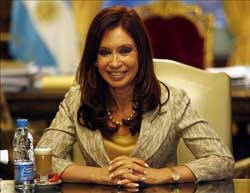
Argentine President Applauds Gay Marriage
Law |
|
Escrito por Lourdes chang
|
|
jueves, 15 de julio de 2010 |
|
|
|
 15
de julio de 2010, 12:03 15
de julio de 2010, 12:03
Buenos Aires, Jul 15 (Prensa Latina) Argentine President Cristina
Fernandez on Thursday applauded the Senate's approval of a bill
legalizing same-sex marriage, the first such law in Latin America.
This is a positive step that defends the right of a minority, Fernandez
said.
The Argentine Senate passed the bill at 4 a.m. Thursday after 15 hours
of debate. The new law will make it possible for gay couples to marry on
the same terms as heterosexual couples.
The bill, previously approved by the Chamber of Deputies, was passed
33-27 in the Senate, with three senators abstaining.
|
|
Modificado el ( jueves, 15 de julio de 2010
)
http://www.plenglish.com/index.php?option=com_content&task=view&id=205969&Itemid=1
http://www.coha.org/argentine-legislators-disregard-the-catholic-church-and-take-a-stand-for-human-rights/
|
MIAMI HERALD
July 13, 2010
Review l Cuba's Teatro El Público offers riveting subterfuge of human nature,
consequences
BY MIA LEONIN
Special to The Miami Herald
Male actors who portray a turbulent love triangle of women would be all about
gender bending. However, Havana-based Teatro El Público's rendition of Rainer
Werner Fassbinder's Las Amargas Lágrimas de Petra Von Kant (The Bitter Tears of
Petra Von Kant) was a surprise from the beginning. The riveting masquerade of
personalities by director Carlos Díaz is as much about character as sexuality.
http://www.miamiherald.com/2010/07/13/v-print/1728579/review-l-cubas-teatro-el-publico.html
http://groups.yahoo.com/group/CubaNews/message/115739
World Anti-Homophobia Day programs:
http://www.uneac.org.cu/PDF/proghomofobia2010.pdf
Cuban drag queens take to the stage AFP May 21, 2010, 3:57 pm
http://au.news.yahoo.com/thewest/lifestyle/a/-/lifestyle/7275296/cuban-drag-queens-take-to-the-stage/
Dalia Acosta: The Struggle Against Homophobia Takes to the Streets
http://www.havanatimes.org/?p=24256
AFP: Cuban police training guarantees respect for homosexuals:
http://www.walterlippmann.com/docs2903.html
Opening Remarks at Family and Society Panel
World Anti-Homophobia Day, Havana, Cuba 2010
by Alberto Roque Guera, CENSEX
http://www.walterlippmann.com/docs2901.html
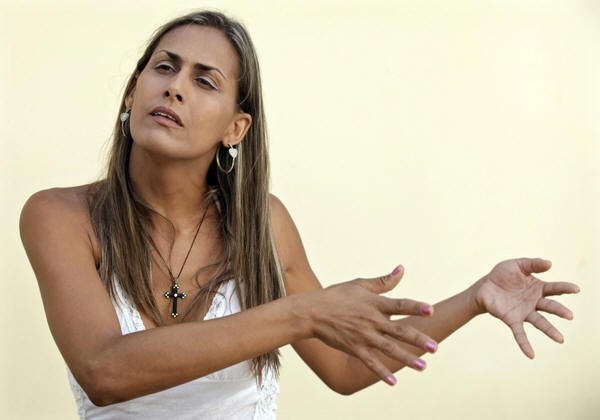
Wendy Iriepa, a transsexual who has undergone a sex
change operation, speaks to Reuters in an interview in Havana May 12, 2010.
Today this 36-year-old tall, blond, exuberant Cuban is the symbol of a
revolutionary program of free surgery sex change in Cuba promoted by Mariela
Castro, daughter of President Raul Castro. Picture taken May 12. (Xinhua/Reuters
Photo)
http://news.xinhuanet.com/english2010/photo/2010-05/16/c_13297069.htm
http://news.xinhuanet.com/english2010/photo/2010-05/16/c_13297069_2.htm
Equal Rights Progress in Cuba
http://www.havanatimes.org/?p=24065
Comments by Karen Lee Wald and Walter Lippmann
http://groups.yahoo.com/group/CubaNews/message/113604
Comments by Fred Feldman:
http://groups.yahoo.com/group/GreenLeft_discussion/message/70386
http://www.southfloridagaynews.com/news/world-news/1429-idaho-even-in-cuba.html
AP: Cubans march against homophobia:
http://groups.yahoo.com/group/CubaNews/message/113606
http://miamiherald.typepad.com/gaysouthflorida/2010/05/cubans-march-against-homophobia.html
A Dyke Abroad: A Cuban Primer for Gays (virulently hostile)
http://www.gaycitynews.com/articles/2010/05/14/gay_city_news/perspectives/opinion/doc4bec4e0f4e687068829870.txt
March 2010
Mysteries of Female Sexuality
by Aloyma Ravelo
http://www.walterlippmann.com/docs2885.html
January 2010
IPS: Wendy - Reconciling the Inner and Outer Image
http://groups.yahoo.com/group/CubaNews/message/111059
Sex reassignment surgery already being practiced in Cuba
http://www.cubanow.net/pages/loader.php?sec=13&t=2&item=8177
A gay Cuban Communist's blog (Spanish)
http://paquitoeldecuba.wordpress.com/
There Are No Tough Guys;
It’s Tough To Be a Guy
http://www.ipsnews.net/news.asp?idnews=48731
Frances Negron-Muntaner:
Mariconerias of State: Mariela Castro, Homosexuals, and Cuban Politics
http://groups.yahoo.com/group/CubaNews/message/107384
http://www.walterlippmann.com/docs2713.html
http://www.nuso.org/upload/articulos/3578_1.pdf
September 2009
HIV/AIDS treatment in Cuba: a rights-based analysis
http://links.org.au/node/1258
HIV/AIDS in Cuba: lessons and challenges
By Tim Anderson
http://www.scielosp.org/pdf/rpsp/v26n1/12.pdf
Posted on Advocate.com October 01, 2009
The New Cuban Revolución
As the daughter of President Raúl Castro, Mariela Castro Espín could
have done anything -- or nothing -- with her life. So why did she decide to
become a champion of Cuba’s gay and transgender communities?
http://www.advocate.com/News/World_News/The_New_Cuban_Revoluci%C3%B3n/
Photos accompanying this story:
http://advocate.com/News/World_News/Out_in_Cuba/
Sexual Diversity in Cuba:
Smokescreen or Academic Myopia?
By:
Alberto Roque Guerra
http://www.walterlippmann.com/docs2596.html
http://www.rebelion.org/noticia.php?id=89957
Keeping AIDS at Bay in Cuba by Bill Strubbe and Karen Wald
http://www.poz.com/articles/Cuba_HIV_Rate_2363_17096.shtml
http://achyontour.blogspot.com/2009/08/npr-interview.html
The truth about queer rights in Cuba
Rachel Evans 21 August 2009
http://www.greenleft.org.au/2009/808/41544
A comment from Cuba on the above article:
http://groups.yahoo.com/group/CubaNews/message/106076
July 2009
BBC Mariela Castro interview: Democracy is an Invention
http://www.walterlippmann.com/docs2516.html English translation
http://miamiherald.typepad.com/cuban_colada/2009/07/ra%C3%BAls-daughter-on-gays-and-democracy.html
http://www.bbc.co.uk/mundo/america_latina/2009/07/090704_2254_marielacastro_intw_gtg.shtml
(video)
Norge Espinosa: Cuba versus Homophobia
http://www.walterlippmann.com/docs2511.html
http://miamiherald.typepad.com/gaysouthflorida/2009/07/commentary-
cuba-vs-homophobia-what-arises-what-there-is-and-what-remains-to-be-done.html
http://tr.im/re18
Morning Star (UK) July 1, 2009)
http://www.morningstaronline.co.uk/index.php/britain/gay_rights_progress_in_cuba
New book explores LGBT gains in Cuba
http://www.workers.org/2009/world/cuba_0702/index.html
Mariela Castro: Another socialism is possible
http://www.ipsnoticias.net/nota.asp?idnews=92506 (Spanish)
Q&A: "Participatory Socialist Democracy Is Essential"
http://www.ipsnews.org/news.asp?idnews=47372 (English)
Senel Paz: "I'm a writer by ears" (Bohemia, March 12, 2009)
http://www.walterlippmann.com/docs2485.html
Strawberry and Chocolate returns to the Cuban stage
http://groups.yahoo.com/group/CubaNews/message/102490
Norge Espinosa: Another rose for a rose-colored Cuba
http://www.walterlippmann.com/docs2035.html
http://akerunoticias.wordpress.com/2008/07/10/%c2%bfotro-color-para-una-cuba-rosa/
http://miamiherald.typepad.com/gaysouthflorida/2009/06/commentary-another-color-for-a-rose-colored-cuba.html
Documentary about Cuban female hip-hop trio Las Krudas
ttp://missionlocal.org/2009/06/review-queer-women-of-color-festival/
Cuba against homophobia - No. 1:
http://www.youtube.com/watch?v=lZNWhOSSPzo&feature=channel_page
Cuba against homophobia - No. 2:
http://www.youtube.com/watch?v=t11MRNCuIgg&feature=channel_page
Cuba's struggle against homophobia
http://www.vancubasolidarity.com/090522filmnight.html
http://groups.yahoo.com/group/CubaNews/message/101840
Castro's daughter: Cuba to reinstate sex changes
http://www.washingtonpost.com/wp-dyn/content/article/2009/05/27/AR2009052702579.html
Vancouver, CA program on Cuba's struggle vs. homophobia, May 22, 2009
http://groups.yahoo.com/group/CubaNews/message/101557
http://www.juventudrebelde.co.cu/cuba/2009-05-18/cuba-celebrates-international-day-agaist-homophobia/
15 minutes long: Spanish-language video of World Anti-Homophobia Day 2009
http://www.cubainformacion.tv/index.php?option=com_content&task=view&id=9971&Itemid=86
EFE: Cuba observes World Anti-Homophobia day with a party
http://www.walterlippmann.com/docs2448.html
Jornada cubana contra la homofobia
Un estigma que perjudica seriamente la salud
Frank Padrón • La Habana Foto: La Jiribilla
http://www.lajiribilla.cu/2009/n419_05/419_04.html (Spanish)
A Stigma That Seriously Impacts our Health
http://www.walterlippmann.com/docs2451.html
(English)
YouTube video of Havana's World Anti-Homophobia Day 2009
http://www.youtube.com/watch?v=o7GGGHME4xE&eur
Results of a search of UNEAC's website for the term "homofobia":
http://www.uneac.org.cu/index.php?act=buscador&act1=buscar&cmborderby=fecha_pub&module=noticias¬icia_texto=homofobia
La homofobia no es incurable
http://www.havanatimes.org/?p=9049&cpage=1#comment-2833 English
http://ipsnoticias.net/nota.asp?idnews=92146
Spanish
Activists dance during a parade marking the International Day
Against Homophobia in Havana, Saturday, May 16, 2009.
(AP Photo/Prensa Latina/Ismael Francisco)
http://miamiherald.typepad.com/gaysouthflorida/2009/05/cuban-gays-dance-conga-against-homophobia.html
SEMlac list of reports on sexual diversity (2009)
http://www.redsemlac-cuba.net/Especial/
http://www.walterlippmann.com/docs2445.html
Havana Times: Cuba and World Day Against Homophobia
http://www.havanatimes.org/?p=8705
Transvestites in the campaign against homophobia
http://www.walterlippmann.com/docs2443.html
May 2009
Cine-Club "Diferente": A proposal to consider
http://www.walterlippmann.com/docs2447.html
http://www.juventudrebelde.cu/cuba/2009-05-16/cine-club-diferente-una-propuesta-para-reflexionar-/
http://www.juventudrebelde.cu/cuba/2009-05-16/cine-club-diferente-una-propuesta-para-reflexionar-/
Mariela, the daughter of President Castro, talks about sex in Cuba
Among other things, she's not happy she hasn't been able to convince her
father to permit
gays to serve in Cuba's Revolutionary Armed Forces.
http://www.walterlippmann.com/docs2431.html
RED DIAPER BABY
Allen Young, a former leftist recounts his unhappy experiences on the
political left, including his unhappy experiences in Cuba many decades ago, which he often
recycles.Young wrote the bitterly hostile 1981 booklet Gays Under the Cuban
Revolution. I take up some of the issues Allen Young raises on this blog:
http://louisproyect.wordpress.com/2009/05/06/red-diaper-baby/
HEALTH-CUBA: HIV-Positive
Want Respect, Not Tolerance
By Dalia Acosta
http://ipsnews.net/news.asp?idnews=46444
CENESEX:
Diversity is natural:
http://www.walterlippmann.com/docs2342.html
http://blogs.poz.com/oriol/archives/2009/03/anti-homophobia_camp.html
http://blabbeando.blogspot.com/2009/03/cuba-milk-to-be-screened-as-part-of.html
'Milk' star Sean Penn: Pal of anti-gay dictators?
04:20 PM PT, Dec 11 2008
http://latimesblogs.latimes.com/the_big_picture/2008/12/milk-star-sean.html
Cuban embodies changing face of HIV
http://www.miamiherald.com/news/miami-dade/story/798638.html
Q&A: Masculinity Doesn't Mean Macho
http://www.ipsnews.net/news.asp?idnews=44961
CUBA: Films that
Tackle Touchy Social Issues
By Dalia Acosta
http://ipsnews.net/news.asp?idnews=44867
New bent on the Cuban revolution
Cultural Crossroads interviews
Iranian-born Montrealer Babak Salari
on his new book of photography about Cuba's queer artistic scenes
http://www.hour.ca/news/news.aspx?iIDArticle=15986
The Dynamic Debut of Raúl Castro [excerpt]
On June 14, 2008, Cuba launched
"Together with You," a government-endorsed movement to spread awareness of
HIV/AIDS among men. This dynamic treatment of AIDS has been broadened to include
planned proposals to affirm same-sex unions scheduled for 2009. The initiative
backed by Raúl has once again surpassed the pace of comparable U.S. social
reforms, pushing toward collective equality by also providing governmental
coverage of applicable gender-reassignment surgery. Given the conservative
nature of Cuban society, these monumental decisions, beginning with the
abolition of anti-sodomy laws in 1979, has now surpassed faltering U.S. progress
toward tackling homophobia. Up to the mid-1990s, Cuba was routinely condemned
for its intolerance, at least until the release of the film Strawberry and
Chocolate. With the screening of a film exhibiting homosexuality, Ricardo
Alarcon, president of Cuba's National Assembly, affirms the idea that -
socialism should be a society that does not exclude anybody. In other
words, Alarcon's statement conveys the need to redefine and expand the
definition of marriage, reforms which presently rest in the government's hands.
The decision to discuss same-sex unions is yet another indication of a more
pluralistic agenda developing within Cuban society.
http://www.scoop.co.nz/stories/WO0811/S00116.htm
Queerly Cuba
PHOTOGRAPHY / Montreal
photographer Babak Salari renders the island's invisible visible
Matthew Hays / Vancouver / Wednesday, May 07, 2008
 A
STUDY IN CONTRASTS.
A
STUDY IN CONTRASTS.
Cast in stunning black and white,
Iranian-born Babak Salari's images
of queer Cubans are clearly empowering
for the subjects, presented without any hint of apology.
http://www.xtra.ca/public/Vancouver/Queerly_Cuba-4752.aspx
Cultural Prejudice Still Lingers
http://www.ipsnews.net/news.asp?idnews=44617
http://annikadelquinto.blogspot.com/2008/10/glbtqia-right-in-cuba.html
Check the photos here:
http://alongthemalecon.blogspot.com/2008/10/cuba-isnt-gay-mecca-yet-but-change.html
http://lezgetreal.com/2008/10/cuba-libre-gay-rights-and-evil.html
Castro champions gay rights in Cuba
http://jaggerkieth.wordpress.com/2008/08/25/castro-champions-gay-rights-in-cuba/
Photo from Carnival in Santiago de Cuba. Undated,
but possibly 2008?
http://www.trekearth.com/viewphotos.php?l=5&p=630036
Gays and the Cuban Penal Code
http://groups.yahoo.com/group/CubaNews/message/89680
http://groups.yahoo.com/group/CubaNews/message/89702
http://lists.econ.utah.edu/pipermail/marxism/2008-August/033558.html
David Thorstad: Cuban penal code: mea culpa:
http://groups.yahoo.com/group/CubaNews/message/89759
Diversity is the norm
(Dossier from University of Havana newspaper,
Alma Mater, for World Anti-Homophobia celebration in Cuba, May 17, 2008)
Preface:
Human beings, not only are we
different in appearance, so are our lifestyles, ways of thinking and acting.
However, the history of our species could be chronicled from the hegemony of
some over others, who have tried to perpetuate their power, discriminating by
skin color, gender, region of origin or sexual orientation.
Alma Mater prefers that we relate ourselves from that richness that there is in
"differences" or from the plurality that all women and men can contribute in
order to build ourselves as social beings.
It is not surprising that in the pages of this university magazine controversial
subjects about gender perspectives, ingrained machismo and a person's right to
define and enjoy their sexual orientation, have been frequently debated without
this implying a discriminatory mark on the internal family, a group of friends
or society as a whole.
This time we share and mark the efforts of several Cuban institutions and
especially the National Center for Sex Education (CENESEX) for developing the
Cuban Day Against Homophobia.
We compiled, through a dossier of articles, commentaries, reports and
interviews, what has seen the light in this publication. It is our grain of sand
for this persevering work which puts women and men at the center, regardless of
their differences.
CubaNews translation by Sue Greene.
ENGLISH TRANSLATION (just starting):
http://www.walterlippmann.com/docs2078.html
FULL SPANISH ORIGINAL
http://www.almamater.cu/sitio%20nuevo/sitio%20viejo/webalmamater/2008/dossier/portada.htm
CubaNews translation by Sue Greene.
Just found, in 2008, from TEN years ago (1998):
Cuba's transformists
 Drag
artists used to end up in jail for performing in a house
Drag
artists used to end up in jail for performing in a house

Cuba is not known for its policies
of social liberalism. For Cuban transsexuals and transvestites, life has been
particularly hard - they have been barred from many public positions, some have
been locked up. But in the last decade the authorities have relaxed their view.
The Transformists, a group of Havana drag artists, are expanding their hips and
painting their faces for a weekly back yard cabaret.
The full story is longer. Go there.
(NOTE: from Walter: in Spanish, "Transformista"
means cross-dresser.
or perhaps drag queen or drag king, depending on context.)
http://news.bbc.co.uk/2/hi/americas/145176.stm
(Sorry, the graphics vanished from the source site.)
Victor Fowler: We are survivors (La Jiribilla,
April 5-11, 2008)http://www.walterlippmann.com/docs2250.html

Cuba regards homophobia, not homosexuality, as the problem.
Its efforts to remove legal and social barriers impeding dignity and parity for
sexual minorities are exemplary. Cuba is the benchmark for LGBT freedom in Latin
America and a global leader in gender and sexual equality. This site is a news
magazine featuring the lives, culture and happenings of LGBT people in Cuba
today.
http://gaycuba.ca/
Cuba: Celebrations of advancing gay rights
by Marcel Hatch
http://www.greenleft.org.au/2008/760/39274
Mariela
Castro: Cuba and sexual diversity,
some comments and clarifications.
This is a response to the claim
that a gay-rights march was prevented in Cuba on June 25, 2008.
In both English and Spanish on the same page.
http://lapolillacubana.wordpress.com/2008/07/03/cuba-y-la-diversidad-sexual-algunos-comentarios-y-aclaraciones/
Cuba Culture and Discovery Tour for Mature
Gays
http://www.cubaadventures.com/
Joe - Junto a ti (Desde Mi Cayito) - Dir. Joel
Guilian
http://vids.myspace.com/index.cfm?fuseaction=vids.individual&videoid=36752669
http://groups.yahoo.com/group/CubaNews/message/88505

http://gaycuba.ca/together/
Pablo Milanes: "No queers in the party"
http://www.typepad.com/t/trackback/1016365/31231712
http://miamiherald.typepad.com/cuban_colada/2008/07/milans-no-queer.html
http://www.elmundo.es/suplementos/cronica/2008/665/1215900012.html
http://blogs.miaminewtimes.com/riptide/2008/07/gayfriendly_cuba.php
Cuban Catholic Church responds to World
Anti-Homophobia Day
http://www.walterlippmann.com/docs2010.html
http://www.palabranueva.net/contens/0806/000105.htm
http://www.vatican.va/roman_curia/congregations/cfaith/documents/
rc_con_cfaith_doc_20030731_homosexual-unions_en.html
Cuba Cancels Gay Pride
Parade
By
Sue Katz,
Consenting Adult. Posted
July 1, 2008.
http://www.alternet.org/sex/90474/?cID=946660#c946660
COHA: The Politics of Illogicality
19. Rights for Homosexuals: Raúl
Castro has allowed a very active gay community to emerge in a country where
homosexuality was previously considered an aberrant criminal offense. In May
2008, this newly empowered group organized a government-supported campaign
against homophobia. It was the first time since the Revolution that Cuban
society has been allowed to gather and speak about this topic. In addition, the
state television network transmitted the American feature film about a
homosexual affair titled “Brokeback Mountain” over its prime-time schedule.
Equally significant, the Cuban parliament is discussing proposals to legalize
same-sex unions and give homosexual couples the same legal benefits enjoyed by
heterosexual couples. Just last month, the authorities stated that not only
would restrictions on sex-change operations be lifted, but that the government
would offer them free of charge to qualifying individuals. Even with the setback
witnessed with the detainment of the organizers of what would have been the
first gay parade, which aimed at obtaining an apology from the government for
its past repression of homosexuality, it would be a mistake to deny that “change
is coming,”1 and that “important strides have been made… [homosexuals are]
slowly gaining a space in society and that’s important.”2
http://www.coha.org/2008/07/the-politics-of-illogicality-north-korea-is-removed-
from-washington%E2%80%99s-terrorist-list-but-cuban-embargo-remains/
Church in Cuba questions government’s promotion of
homosexuality
http://www.christiantelegraph.com/issue2366.html
http://blabbeando.blogspot.com/2008/06/cuba-1st-ever-gay-pride-march-canceled.html
The ‘Telenovela’ as Springboard for Public Debate
http://ipsnews.net/news.asp?idnews=42978
Catholic Church gets it wrong on gay rights
(Rightist Cuban-American blogger faults church for not being hostile enough to
the Cuban government.)
http://marcmasferrer.typepad.com/uncommon_sense/2008/06/catholic-church-gets-it-wrong-on-gay-rights.html
Karen Lee Wald responds to "gay pride parade cancelled"
http://groups.yahoo.com/group/CubaNews/message/87337
Cuba's gay pride parade cancelled
http://sun-sentinel.com/news/local/cuba/sfl-0625,0,7044420.story
If you go ... to the rally for Cuba's
first Gay Pride parade
http://sun-sentinel.com/news/local/cuba/sfl-flrndparadebox25sbjun25,0,3345019.story
Cuba's gays set for parade today
http://www.sun-sentinel.com/services/newspaper/printedition/local/sfl-flrndgayparadepnjun25,0,6064088.story
Cuban church protests support for gay rights
http://ap.google.com/article/ALeqM5gbyA5ykfr5l1fOWDHLZmFSA8zCawD91GPIGG0
Unity Coalition to rally in Miami to support
first gay pride march in Cuba
http://miamiherald.typepad.com/gaysouthflorida/2008/06/unity-coalition.html
Cabaret: The Cuban version
http://www.walterlippmann.com/docs1992.html
NEW
Homosexuality in Cuba: The price of the difference
(La Jiribilla/Alma Mater)
http://www.walterlippmann.com/docs1963.html
Cuba to offer free sex
changes
http://www.telegraph.co.uk/news/newstopics/howaboutthat/2089218/Cuba-to-offer-free-sex-changes.html
Cuba approves sex-change operations
http://news.bbc.co.uk/go/pr/fr/-/1/hi/world/americas/7441448.stm
http://www.reuters.com/article/healthNews/idUSN0639539720080606?feedType=RSS&feedName=healthNews
Autoriza el gobierno del presidente Raúl Castro las
operaciones de cambio de sexo
http://www.jornada.unam.mx/2008/06/06/index.php?section=mundo&article=034n1mun&partner=rss
NEW
Sexuality in Cuba: Abel Sierra 25/06/08
http://www.londonmet.ac.uk/research-units/cuba/events/forthcoming/sierra.cfm
Free Sex
Change Operations Approved
http://www.ipsnews.net/news.asp?idnews=42693
Sexual
Diversity - the Rainbow Revolution
http://ipsnews.net/news.asp?idnews=42445
Senel Paz receives literary award in Portugal
http://groups.yahoo.com/group/CubaNews/message/86017
Stinkin' Liar
Excerpt from Miami's just
released Cuban Novel, Down to the Bone,
written by moi, Mayra Lazara Dole.
Enjoy!
http://www.ambiente.us/0608MLDOLEDownToTheBone.html
Our Secrets Are Safe Tonight
Havana December 2006
http://www.snreview.org/0108Witzel.html
NEW
Frida from Cuban Art
http://www.walterlippmann.com/docs1521.html
MOVING PHOTO GALLERY FROM MAY 17, 2008
WORLD ANTI-HOMOPHOBIA DAY IN HAVANA
http://www.lajiribilla.co.cu/2008/n368_05/368_22.html
Special issue of La Jiribilla published after
World Anti-Homophobia Day:
May 24-30, 2008
http://www.lajiribilla.cu/
Socialist Cuba promotes anti-homophobia
campaign
Sunday, May 25, 2008 By: John Peter Daly
http://www.pslweb.org/site/News2?JServSessionIdr007=2rubwzw2c3.app13a&page=NewsArticle&id=9179&news_iv_ctrl=1261
http://perezhilton.com/2008-05-20-cuba-libre-coming-soon-we-hope
27 second CNN report on World Anti-Homophobia Day
in Cuba
http://www.towleroad.com/2008/05/cuba.html
http://www.globalvoicesonline.org/2008/05/19/cuba-international-day-vs-homophobia/
http://www.queerty.com/cuba-france-join-intl-effort-against-homophobia-20080519/
http://www.nydailynews.com/latino/2008/05/19/2008-05-19_cuba_holds_large_gay_rights_rally_.html
LA JORNADA: Hundreds mark World Day Against
Homophobia in Havana
http://www.walterlippmann.com/docs1952.html
http://www.jornada.unam.mx/2008/05/18/index.php?section=mundo&article=023n1mun&partner=rss
Cuba marks World Day Against Homophobia (Report
on Saturday's public event)
http://www.juventudrebelde.cu/cuba/2008-05-18/celebran-en-cuba-dia-mundial-contra-la-homofobia/
http://gaytourguidecuba.com/

Saturday 28 June to Saturday 5 July 2008
http://gaycuba.ca/
Cuban Government
Backs Calls to Combat Homophobia
http://www.sfgate.com/cgi-bin/article.cgi?f=/n/a/2008/05/17/international/i140951D78.DTL
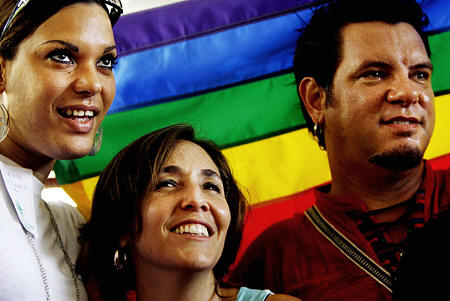
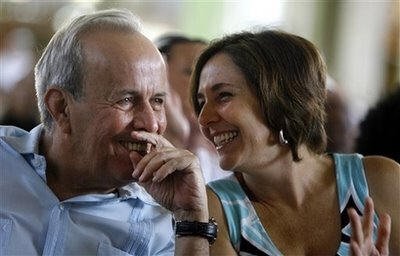
NEW
He's not a monster, he's our son!
http://cubahora.co.cu/index.php?tpl=principal/ver-noticias/ver-not_ptda.tpl.html&newsid_obj_id=1025585
http://perezhilton.com/2008-04-03-more-progress-in-cuba
NEW
Today a different kind of movie club starts
http://www.juventudrebelde.cu/cultura/2008-05-14/comienza-hoy-un-cine-club-diferente/
NEW
Cuba marks World Anti-Homophobia Day
http://www.walterlippmann.com/docs1945.html
http://cubahora.cu/index.php?tpl=principal/ver-noticias/ver-not_ptda.tpl.html&newsid_obj_id=1025543
Hostile commentary from Cuban exile living in
Australia
Now, it'd be churlish to
criticise Ms Castro's work on behalf of one of the most marginalised minorities
in Cuba. But her ability to essentially whitewash the atrocious treatment of
Cuban homosexuals over the past 50 years by the regime led by her uncle, her
father and the likes of Ricardo Alarcon is, well, breath-taking.
http://luismgarcia.blogspot.com/2008/05/whitewash-time.html
CENESEX proposes conjugal visits for gay
prisoners
http://www.cubaencuentro.com/es/cuba/noticias/el-cenesex-propone-que-los-homosexuales-presos-puedan-recibir-visitas-conyugales-85030
Paulitics: Paul’s Socialist Investigations
Thus, when we look at the recent good moves on this file in Cuba in concert
with the multiple attempts by Venezuelan President Hugo Chavez to make Venezuela
the first country on the face of the planet to explicitly recognize same-sex
marriages in the text of the constitution, it is clear that socialism, when done
right, is a way forward for everyone.
There’s still a lot of work to be done throughout Latin America for the GLBT
community, and we should especially make sure not to let the governments —
http://paulitics.wordpress.com/2008/05/17/progress-for-same-sex-rights-in-cuba/
Aceptar la
diversidad
Por: Suleidy Peñate Ramos
cip241@cip.enet.cu
http://www.rcm.cu/trabajos/2008/mayo/16/comentario_homofobia.htm
Sexual diversity - judging or understanding?
http://www.walterlippmann.com/docs1939.html
Complete English translation
http://www.juventudrebelde.co.cu/cuba/2008-05-13/sexual-diversity-judging-or-understanding/
http://www.juventudrebelde.cu/cuba/2008-05-11/diversidad-sexual-juzgar-o-entender/
PDF of this two-page article:
http://www.walterlippmann.com/juventud-rebelde-05-11-2008-homofobia.pdf
Mariela Castro: Cubans can't be denied the
right to leave the country (La Vanguardia, Spain)
http://www.walterlippmann.com/docs1938.html
http://www.lavanguardia.es/lv24h/20080510/53462379933.html
Cuba Increasing HIV Prevention Efforts
Targeted at MSM, Health Official Says
http://www.kaisernetwork.org/daily_reports/rep_index.cfm?DR_ID=52091
Belgian surgeons to perform Cuba's gender reassignment
operations
http://www.pinknews.co.uk/news/articles/2005-7613.html
AFP: Cubans should be free to travel,
says Castro daughter
http://groups.yahoo.com/group/CubaNews/message/84645
EFE: Cuba says it has over 9,000 HIV and
AIDS cases
http://groups.yahoo.com/group/CubaNews/message/84646
AFP: Raul Castro's daughter among
Cuba's young leaders
http://groups.yahoo.com/group/CubaNews/message/84647
AFP: Raul Castro's daughter spearheads anti-homophobia
drive
http://groups.yahoo.com/group/CubaNews/message/84648
Cuba will mark world day against homophobia, La
Jornada, May 6, 2008
http://www.walterlippmann.com/docs1937.html
Diversidad es la norma Programa de
lucha contra la homofobia
Jornada Cubana por el Día Mundial contra la Homofobia 17 de mayo 2008
http://www.walterlippmann.com/docs1936.html
Memo to Europe from Mariela Castro
http://machetera.wordpress.com/2008/04/01/memo-to-europe-from-mariela-castro/
Cuba marks world day against homophobia for
second time (La Jornada)
http://www.jornada.unam.mx/2008/05/06/index.php?section=mundo&article=029n2mun
Debate over homophobia on Cuban TV program.
http://groups.yahoo.com/group/CubaNews/message/84407
Sexual diversity on Screen (SEMlac)
http://groups.yahoo.com/group/CubaNews/message/84402
Love, Censorship and other demons (Juventud
Rebelde)
Within more traditional
boundaries is Jesús Miguel Hernández’s
Ella trabaja
(She works), about the occasionally but still insufficiently
addressed topic of transvestism in Cuba: as made quite clear by the
interviewees’ graphic testimony, the new subjects can and should join the
efforts to develop our society while they fulfill themselves as social beings,
which goes way beyond the specific details of this issue. Among «the others»,
even those who have the best intentions harbor prejudice and misunderstanding
(calling their leanings «a flaw», for example, remains a regular feature in
urgent need of clarification and neutralization).
http://www.walterlippmann.com/docs1800.html
Transexualism
http://www.juventudrebelde.cu/cuba/2008-04-19/transexualismo-el-derecho-a-ser-consecuentes-con-la-identidad-de-genero/
Miami Gay and Lesbian Film Festival (2008)
Voodoo Woman, historia de un documentalista que llega a Cuba a filmar sobre
el hip hop y descubre el secreto mundo de la Santería. En esta cinta dirigida
por la colombiana Carolina Valencia, la santería exorciza los fantasmas sexuales
del cineasta, tras lo cual decide convertirse en mujer
http://southflorida.elsentinel.com/revista/sfl-flelrevgaycine0419brapr19,0,5265046.story
Group of Transgender People Spread HIV Prevention Messages
Among MSM in Cuba
http://www.kaisernetwork.org/daily_reports/rep_index.cfm?DR_ID=51038
Mayra Lazara Dole: Letter to Cuba/Carta Pa’ Cuba:
http://groups.yahoo.com/group/CubaNews/message/82801
Interview with Mayra Lazara Dole
http://worththetrip.wordpress.com/2008/03/25/an-interview-with-mayra-lazara-dole/
i hope this email finds you well. My Miami Cuban YA novel,
Down to the
Bone, was just released by Harper Collins. It's got an all Cuban LGBTQ cast
of characters (a few who just arrived from Cuba, some Miami Cuban right-wing
homophobes, mixed with amazing Cuban youth, etc.). you asked me a while back
to let you know when it was released.
http://groups.yahoo.com/group/CubaNews/message/82732
Cuban parliament considers LGBT rights bill
http://pinknews.co.uk/news/articles/2005-7238.html
QUEERTY: Mariela Castro's Gay Gamble
http://www.queerty.com/mariela-castros-gay-gamble-20080327/
Painting Cuba
By: CHRISTOPHER MURRAY
03/27/2008
The artist and documentarian James Rauchman, 55, has been doing a colossal
series of work about gay life in Havana, Cuba. What began as the expression of a
sexual obsession has grown into a major series of works in different forms -
oil, watercolor, film - that embraces the kaleidoscopic contradictions of gay
people's experiences in Cuba.
http://www.gaycitynews.com/site/news.cfm?newsid=19429564&BRD=2729&PAG=461&dept_id=569333&rfi=6
 Castro
Champions Gay Rights in Cuba
Castro
Champions Gay Rights in Cuba
http://news.bbc.co.uk/2/hi/americas/7314845.stm
Transexuals and transvestites meet at support
group sessions.
Women Talk to Women about HIV/AIDS
http://www.ipsnews.net/news.asp?idnews=41738
Emilio Bejel: The Write Way Home, A Cuban-American Story (2003)
http://www.walterlippmann.com/bejel.html
Transvestites and Transformistas against AIDS (IPS)
http://groups.yahoo.com/group/CubaNews/message/81736
Transvestites and Crossdressers
Key Workers Against AIDS
By Dalia Acosta
http://www.ipsnews.net/news.asp?idnews=41623
Raul Castro a blur to S.D. team that played in
Cuba
If anything, the new 76-year-old ruler of Cuba is quieter than
his brother, Abourezk said. And Landau added that Raul Castro's style is
somewhat different from Fidel, even if the substance of their governance is the
same. Raul Castro's daughter, Mariela Castro Espin, is director of the Cuban
National Center for Sex Education. She has long campaigned for effective AIDS
prevention, as well as acceptance of homosexuality, Landau said.
http://www.argusleader.com/apps/pbcs.dll/article?AID=/20080302/NEWS/803020308/1001
Cuba in Transition II
Saturday, February 16th 2008
http://www.stabroeknews.com/index.pl/article_editorial?id=56539202
Same-Sex Marriage in Cuba Floated
By: ANDY HUMM 02/14/2008
The culture minister of Cuba, Abel Prieto, has come out in favor of same-sex
marriage - another indication that the country is liberalizing under acting
President Raul Castro, brother of the legendary Fidel, whose persecution and
incarceration of homosexuals decades ago was widely documented. ©GayCityNews
2008
http://www.gaycitynews.com/site/news.cfm?newsid=19297572&BRD=2729&PAG=461&dept_id=568857&rfi=6
Politburo
member backs gay marriage in Cuba
http://www.pinknews.co.uk/news/articles/2005-6818.html
Interesting Debates on Taboo Subjects
in Workshop Gender and Communication in the East of Cuba
http://www.tiempo21.cu/English/Culture/february08/debates_subjects_workshop_gender_communication_080208.htm
Gay Marriage Coming to Cuba?
http://www.hotgaynews.com/post/25836042
Cuban law
may recognise same-sex partners, say officials
http://www.pinknews.co.uk/news/articles/2005-6619.html
Cuba moving towards marriage equality
http://joemygod.blogspot.com/2008/01/cuba-moving-towards-marriage-equality.html
Society is gradually shifting ground on sexual
diversity
http://www.walterlippmann.com/docs1724.html
El gay y otros
sujetos semejantes en el audiovisual cubano
http://www.temas.cult.cu/revistas/52/14%20Frank.pdf
Cuba: Lesbians Marry With Government Blessing
http://aviewtothesouth.blogspot.com/2008/01/cuba-lesbians-marry-with-government.html
Achy Obejas talks about Cuba, books and
sexuality
http://www.windycitymediagroup.com/gay/lesbian/news/ARTICLE.php?AID=17092
Of women, silences and lovers
(Juventud Rebelde)
A Cuban play’s interesting approach to maternity
might help break the silence about the issue of lesbianism.
http://www.walterlippmann.com/docs1278.html
Cuba’s official homophobia of days gone by a
mistake
(Mariela Castro: La Jornada, December 10, 2007)
http://www.walterlippmann.com/docs1682.html
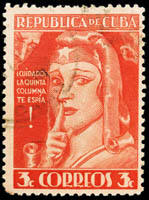 Machismo
not OK, but not yet K.O. in Cuba (IPS)
Machismo
not OK, but not yet K.O. in Cuba (IPS)
5 December 07 - Gradually, more men in Cuba are
declining to take on traditional masculine behaviour patterns, and women who
oppose the machismo and sexism that still predominates are opening up ways of
changing gender relations, beyond the effects of official measures taken to
promote equality over the last 50 years.
http://www.humanrights-geneva.info/spip.php?article2511
Metrosexuality
(Juventud Rebelde, November 2007)
http://www.walterlippmann.com/docs1633.html
NEW
Transexualism: Between Being and
Pretending
(Juventud Rebelde, November 2007)
http://www.walterlippmann.com/docs1632.html
Is homosexuality persecuted in Cuba?
(Comments and video)
http://www.walterlippmann.com/docs1536.html
Gay liberationist John O'Brien disagrees:
http://lists.econ.utah.edu/pipermail/marxism/2007-October/018396.html
Lovers torn apart by Castro's Cuba
http://www.latimes.com/entertainment/la-et-stage21sep21,1,1399380.story
http://groups.yahoo.com/group/CubaNews/message/72729
IMPORTANT - from a top Catholic bishop
El matrimonio y la familia a lo largo del cristianismo.
por Monseñor Carlos M. de Céspedes GARCÍA-MENOCAL
El matrimonio y la familia a lo largo de la historia del cristianismo.
http://www.palabranueva.net/contens/0707/000105.htm
From
Cuba, where homosexuals fair poorly . . .
01:00 AM EDT on Monday, September 24, 2007
http://www.projo.com/movies/content/lb_dospatrias_09-24-07_0F763D4.1f8b930.html
Prominent Cuban Roman Catholic
accepts civil union, but not gay marriage:
http://www.walterlippmann.com/docs1498.html
Mariela Castro: Cuba
is ready for transformations with and without Fidel (English)
http://www.walterlippmann.com/docs1439.html
Mariela Castro: Cuba está preparada para transformaciones con y sin Fidel
Viernes, 03 de Agosto de 2007
http://www.unionradio.com.ve/Noticias/Noticia.aspx?noticiaid=211049
San Francisco Queer Group Headed For Cuba 07.28.07
The tour is being conducted by Sonja de Vries,
co-founder of San Francisco-based Queers for Cuba, the first LGBT (lesbian, gay,
bisexual, transgender) group to be officially invited to Cuba. Ms. de Vries
studied race and gay issues in Havana from 1993 to 1994, and her groundbreaking
documentary "Gay Cuba" remains the last word on the subject.
http://www.gaywired.com/article.cfm?section=66&id=15732
Clarification on message above:
http://groups.yahoo.com/group/CubaNews/message/69615
Lesbianism: Woman vs. Woman? (Somos Jovenes, April 2007)
http://www.walterlippmann.com/docs1459.html
Cuba surpasses world on same-sex, trans rights
http://www.newscloud.com/read/86538
Castro's neice [sic] pushes for gay rights in Cuba
http://www.ruffian.be/blogs/index.php/gay/2007/07/11/castro_s_neice_pushes_for_gay_rights_in_
Cuba goes ape shit over Mapplethorpe (July 3, 2007)
http://www.queerty.com/news/cuba-goes-ape-shit-for-mapplethorpe-20070703/
Marilyn Bobes - Senel Paz: ¿Reconciliación con la literatura?
http://www.juventudrebelde.cu/cultura/2007-07-01/senel-paz-reconciliacion-con-la-literatura/
Communist Cuba Goverment [sic] Seeks to Secure
Homosexual "Right" to Adoption (6-28-2007)
http://www.lifesite.net/ldn/2007/jun/07062806.html
Cuban government seeking to make adoption
a “right” for homosexual couples
http://www.catholicnewsagency.com/new.php?n=9755
Cuba going queer? (June 18, 2007)
http://www.queerty.com/news/cuba-going-queer-20070618/
Cuba entierra el 'machismo-leninismo'
http://www.walterlippmann.com/docs1341.html
Cuba fights AIDS in its own way (2003)
http://www.thebody.com/content/art32967.html
L.E.: ¿Dos lesbianas se pueden
contagiar con el VIH si una
está infectada? ¿De qué forma? ¿Cómo se puede evitar?
http://www.juventudrebelde.cu/cuba/2007-02-10/pregunte-sin-pena/
CUBA: Proposed
Reform Would Give Gay Couples Equal Rights
By Dalia Acosta (June 15, 2007)
http://www.ipsnews.net/news.asp?idnews=38196
Ernesto Gonzalez: Gay Cuban author from Chicago:
http://groups.yahoo.com/group/CubaNews/message/67347
http://www.cubaunderground.com/content/view/2689/
http://www.amazon.com/Las-Costas-del-Para%C3%ADso-Soterrada/dp/1419630938
http://armengol.blogspot.com/2006/07/publican-novela-sobre-la-vida-gay-en.html
Arthur Sotto's Night of... (June 5, 2007)
http://www.granma.cu/ingles/2007/junio/mar5/22Inocentes-i.html
EXCELLENT INTERVIEW
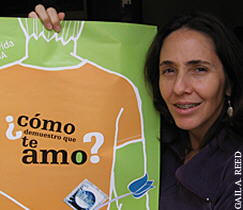 Mariela
Castro Espin, in her own words.
Mariela
Castro Espin, in her own words.
http://www.medicc.org/publications/
medicc_review/0406/mr-interview.html
T-Shirt says: "How do I love you?"
=============================================================
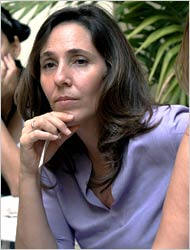 A
Castro Strives to Open Cuban Society’s Opinions on Sex
A
Castro Strives to Open Cuban Society’s Opinions on Sex
By MARC LACEY, June 9, 2007
http://www.nytimes.com/2007/06/09/world/americas/09castro.html
Cuba vive una revolución... sexual
http://www.lavanguardia.es/gen/20070523/51352040777/noticias/cuba-vive-una-revolucion...
-sexual-partido-comunista-raul-castro-revolucion-venezuela-mexico-granma-castro-habana-mira.html
http://www.lavanguardia.es/lv24h/20070523/imp_51352040777.html
Leonardo Padura Fuentes profiles author Senel Paz (Spanish)
(Paz wrote the story which became the film Strawberry and Chocolate)
http://www.juventudrebelde.cu/cultura/2007-05-20/el-esperado-retorno-literario-de-senel-paz/
Sexuality Between Two Waters (Somos Jovenes, December 2006)
This essay discusses bisexuality
http://www.walterlippmann.com/docs1174.html
Let's Talk About Sexuality
by Beatriz Torres Rodríguez
Chapter 7: Sexual Orientation
Editorial Scientifica-Technica, 2006
http://www.walterlippmann.com/docs1209.html
Calvin Tucker: Havana Rights (Guardian), March 28, 2007
http://commentisfree.guardian.co.uk/calvin_tucker/2007/03/the_street_scene_was_entertain.html
Karen Lee Wald: helpful comments on Calvin Tucker's
Guardian article:
http://groups.yahoo.com/group/CubaNews/message/63704
Mariela: Bush Bites
Q.: Is respect for the rights of homosexuals a sign of change or transition
in Cuba?
A.:
Absolutely. Cubans have understood perfectly the need to respect the
sexual tendencies everyone has, and that's not a symptom of anything else.
http://miamiherald.typepad.com/cuban_colada/2007/03/mariela_bush_bi.html
When it comes to gay rights,
is Cuba inching ahead of USA?
By DeWayne Wickham USA TODAY
http://blogs.usatoday.com/oped/2007/02/post_72.html
http://www.walterlippmann.com/docs1150.html
http://www.walterlippmann.com/docs1151-e.html
http://www.granma.cu/ingles/2007/marzo/vier2/10today-i.html
Homosexuals as the New Niggers (1973)
http://www.walterlippmann.com/docs1135.html
Race and Sex in Cuba (2007)
(Basically, this says Cuba is a Terrible place in all ways!)
http://www.isreview.org/issues/51/cuba_race&sex.shtml
 As Castro fades, a crop of new
leaders
As Castro fades, a crop of new
leaders
http://www.csmonitor.com/2006/1227/p06s01-woam.html
http://groups.yahoo.com/group/CubaNews/message/59561
Sashaying Through a Door Swung Open in Cuba,
Jose Shines as Nayla
By Manuel Roig-Franzia
Washington Post Foreign Service
Tuesday, December 26, 2006; A22
http://www.washingtonpost.com/wp-dyn/content/article/2006/12/25/AR2006122500666_pf.html
GORE VIDAL AT THE AULA MAGNA
(Spanish)
http://www.cubadebate.cu/index.php?tpl=especiales-show¬iciaid=8025¬iciafecha=2006-12-13
GORE VIDAL IN CUBA (Selection of news stories)
http://www.walterlippmann.com/gore-vidal-in-cuba.html
Armando Armengol: Homosexual Encounter (El Nuevo Herald)
http://groups.yahoo.com/group/CubaNews/message/58735
http://www.miami.com/mld/elnuevo/news/opinion/16156988.htm
Mariela Castro: New Face of Castro's Cuba Dynasty
(Scotsman 12-09-2006)
http://news.scotsman.com/international.cfm?id=1828602006
http://groups.yahoo.com/group/CubaNews/message/58734
Cycle of Gay Cinema opens in Cuba (11-14-2006)
http://www.walterlippmann.com/docs725.html
Video from CNN on gays in
Cuban life and television:
NOTE: The image can be blown up much larger.
http://cbs4.com/video/?id=17317@wfor.dayport.com
Cuban gay soap cracks a legacy of hate
The huge success of a gay soap opera suggests
Cuban society
has begun to accept homosexuality.
BY MIAMI HERALD STAFF
cuba@MiamiHerald.com
http://www.miami.com/mld/miamiherald/news/world/americas/15939853.htm
http://www.juventudrebelde.cu/cuba/2006-09-30/pregunte-sin-pena/
Mariela Castro: "I am proud of my father"
(BBC interview)
http://www.walterlippmann.com/docs955.html
--------------------------------------------------------------------------------------------------------------------
Federico Garcia Lorca in his Cuban Period (2006)
http://www.walterlippmann.com/docs909.html
Federico Garcia Lorca: Goblin and Angel (2006)
<http://www.cubarte.cult.cu/eng/global/loader.php?cat=actualidad&cont=showitem.php&id=1050&tabla=entrevista&anno=&seccion=&tipo=>
Sexual Revolution: Mariela Castro speaks out for Cuba's gay minority
 Mariela
Castro, niece of Fidel Castro, attends a session on human rights yesterday at
the Palais des congres. She is a vocal supporter of rights for Cuba's lesbians,
gays, bisexuals and the transgendered. (July 29, 2006)
Mariela
Castro, niece of Fidel Castro, attends a session on human rights yesterday at
the Palais des congres. She is a vocal supporter of rights for Cuba's lesbians,
gays, bisexuals and the transgendered. (July 29, 2006)
Photograph by : GORDON BECK, THE GAZETTE
http://www.canada.com/montrealgazette/news/montreal/story.html?id=4f764b9d-1adf-463d-b72c-67e6fa8b056e
http://groups.yahoo.com/group/CubaNews/message/52632
Cuban gays find support in Fidel's Niece (Miami Herald, July 29, 2006
http://groups.yahoo.com/group/CubaNews/message/52626
Cómo trata Cuba el homosexualismo? (Radio Rebelde, July 14, 2006)
http://www.radiorebelde.com.cu/noticia/salud/salud2-140706.htm
I'm homosexual...So what? (Somos Jovenes, June 2006)
http://www.walterlippmann.com/docs818.html
Castro Niece Fights for New Revolution (Reuters, June 29, 2006)
http://groups.yahoo.com/group/CubaNews/message/51277
Respect for Sexual Diversity
(Juventud Rebelde,
June 10, 2006)
http://www.walterlippmann.com/docs696.html
Homosexualidad en Cuba: el debate sale a la palestra (El Nuevo Herald
http://www.miami.com/mld/elnuevo/14780601.htm
http://groups.yahoo.com/group/CubaNews/message/50951 (Spanish)
AIDS is the Problem, Not Sexual Preference (Trabajadores) June 2006
http://www.politicalaffairs.net/article/articleview/3547/1/189/
http://www.trabajadores.cubaweb.cu/SUPLEMENTO-SALUD/enfermedades-trasmisibles/preferencia.htm
Art and Love vs. AIDS (2006)
http://www.walterlippmann.com/docs669.html
Gary Marx: Helping Cubans realize "what it means to be gay"
http://www.sanluisobispo.com/mld/sanluisobispo/14739778.htm
http://lists.econ.utah.edu/pipermail/marxism/2006-June/043180.html
Larry Oberg: The Status of Gays and Lesbians in Cuba (March 2006)
http://www.cubanlibrariessolidaritygroup.org.uk/articles.asp?ID=177 English
http://www.walterlippmann.com/docs654.html French
Infomed postings on La Cara Oculta de la Luna
http://www.sld.cu/mainsearch.php?q=La%20cara%20oculta%20de%20la%20luna&d=1&x=5&y=6
Giant panel discussion at CubaSi website - over 32 thousand words (Spanish)
http://www.cubasi.cu/desktopdefault.aspx?spk=160&clk=117731&lk=1&ck=61326&spka=36
http://www.walterlippmann.com/docs656.html
The visible side of the moon.
http://www.walterlippmann.com/docs637.html
http://cubahora.co.cu/index.php?tpl=principal/ver-noticias/ver-not_cult.tpl.html&newsid_obj_id=1012630
Cuba divided on the issue of bisexuality (La Jornada, May 8, 2006)
http://www.walterlippmann.com/lgbt-cuba007.html
http://www.jornada.unam.mx/2006/05/08/056n1soc.php
Gay Soap Opera Stirs Cuba
The talk of Cuba is a soap opera that broaches
the subject of homosexuality for the first time on the country's television, the
BBC reported. Besides dealing with a taboo subject and becoming a dominant
subject of conversation on the job and in the streets, the telenovela "The Dark
Side of the Moon," about the problems of a married bisexual man, has led to
discrimination against its leading actor, Rafael Lahera. "People think I'm gay,"
he said, adding that he has been turned down for acting jobs because prospective
employers don't want to hire a gay man. The men in the telenovela are not shown
having physical contact, but the dialogue has created a stir. Yaser (Mr. Lahera),
the bisexual who learns about himself through a sexual relationship with a male
friend, is rejected by his parents and is met by revulsion among his other
friends. "Everything I have sacrificed myself for, I have lost," he says. His
partner expresses understanding. "I also lost the affection of my parents and
siblings," he says. Reacting to "The Dark Side of the Moon," an unidentified
retired man told the BBC, "I cannot get used to it, because what we were taught
when we were young was morally different."
Arts, Briefly: The New York Times, May 5, 2006
http://www.nytimes.com/2006/05/05/arts/05arts.html
http://groups.yahoo.com/group/CubaNews/message/49928
La Naturaleza pone y el hombre dispone (Sexo Sentido, May 6, 2006)
http://www.jrebelde.cu/secciones/sexosentido/portadasexo.html
Aqua Girl: A Beach Party Fundraiser with Class
(Miami Herald, May 6, 2006) lesbians in Miami helping one another
http://groups.yahoo.com/group/CubaNews/message/49921
An Open Message (Interview with
Rafael
(Cheíto) González, director of Cuban
soap opera La Cara Oculta de la luna, published April 28, 2006.
http://www.walterlippmann.com/docs601.html
La Cara Oculta: Our goal has not been to shock.
http://www.walterlippmann.com/docs600.html
http://www.lajiribilla.co.cu/2006/n260_04/260_08.html
Gay Soap Causing a Stir in Cuba
http://www.allheadlinenews.com/articles/7003437202
Cuban Soap Opera Causes Controversy (BBC, May 3, 2006
http://groups.yahoo.com/group/CubaNews/message/49824
Evidencias de un relieve incómodo Joel del Río • La Habana
http://www.lajiribilla.co.cu/2006/n260_04/260_06.html
BROKEBACK MOUNTAIN - excerpt on Cuban website
http://www.cenesex.sld.cu/webs/diversidad/fresay.htm
La cara oculta de… Yassel Yanela Soler Mas • La Habana
http://www.lajiribilla.co.cu/2006/n260_04/260_07.html
A revealed face: Paquita Armas Fonseca • La Habana
http://www.lajiribilla.co.cu/2006/n260_04/260_13.html
http://www.cult.cu/eng/global/loader.php?cat=actualidad&cont=showitem.php&id=964&tabla=entrevista&anno=&seccion=&tipo=
http://www.caimanbarbudo.cu/caiman333/paginas/novela33.htm
Cuba: A Different AIDS TV lineup (April 25, 2006
http://www.amsterdamnews.com/News/article/article.asp?NewsID=8117&sID=12
TV Serial Stirs Up Social Controversy
Orlando Matos, April 17, 2006
http://www.ipsnews.net/news.asp?idnews=32913
The "Look" - Where does it come from?
http://www.walterlippmann.com/docs543.html
El Che de los gays (Victor Robles, a Chilean gay activist)
http://elchedelosgays.blogspot.com/
http://www.walterlippmann.com/docs347.html
(English translation of the Chilean activist's page)
Not so hidden and yes unavoidable
This current dramatic series on Cuban television deals
with many topics, but centers on the relationship between an openly gay man and
his married, closeted male lover.
http://www.walterlippmann.com/docs541.html
The Little Red Riding Hood
syndrome
“My name’s
Joel. I’ve been a health promoter for four years, since I got HIV. My
family, mainly on my mother’s side, has just started to accept me. They bear
with me, albeit out of pity because I’m infected.
http://www.walterlippmann.com/docs497.html
Gay beaches in Cuba;
Gay Friendly Beach Locations
http://www.cavejunctionnews.com/articles/index.cfm?artoid=329654
Gay love in a time of Cholera (Cuba Literaria March 28, 2006)
http://www.walterlippmann.com/lgbt-cuba006.html
Not your usual suspects: Cuban novelist Leonardo Padura interview by Political
Affairs
http://www.politicalaffairs.net/article/articleview/3091/1/158/?PrintableVersion=enabled
(In both English and Spanish at the same page.)
El amor gay en el tiempo de la cólera
http://www.cubaliteraria.cu/delacuba/ficha.php?Id=2502
Mariela Castro interview (MEDICC Review, March-April 2006)
http://www.medicc.org/medicc_review/0406/mr-interview.html
Gender, Vulnerability and their relation to HIV/AIDS (2006)
http://www.medicc.org/medicc_review/0406/cuban-medical-literature-1.html
Unseen Faces
http://www.walterlippmann.com/docs468.html
Cuban TV series on Aids Sparks Controversy (EFE)
http://groups.yahoo.com/group/CubaNews/message/47733
Brokeback Mountain
http://www.walterlippmann.com/docs423.html
http://www.cenesex.sld.cu/webs/diversidad/fresay.htm (Spanish excerpt by
Annie Proulx on Cuban website)
Lesbianas y VIH
http://www.cenesex.sld.cu/webs/diversidad/lesbianas%20vih.htm
Promiscuidad, el falso dilema
http://www.cenesex.sld.cu/webs/diversidad/promiscuidad.htm
 For Dressing like
a Man.
For Dressing like
a Man.
A new Book on Transexuality.
01/18/2006
By: Danae C. Diéguez.
http://www.cubasi.cu/DesktopDefault.aspx?
SPK=160&CLK=107903&LK=2&CK=56377&SPKA=35
http://www.walterlippmann.com/docs364.html
Mariela Castro at the National Assembly 12-2005
http://groups.yahoo.com/group/CubaNews/message/45040
Cuban parliament studies transsexual recognition
http://www.walterlippmann.com/docs359.html
Wendy: to live in a wrong body
http://www.walterlippmann.com/docs360.html
No turning back on gay rights in Cuba (12-2005)
http://ipsnews.net/print.asp?idnews=31582
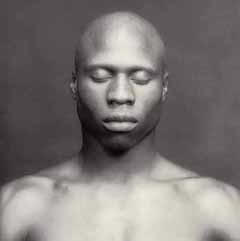 Mapplethorpe llega a la Fototeca
http://www.granma.cubaweb.cu/2005/12/13/cultura/artic03.html
¿Mapplethorpe en La Habana?
http://www.habanaradio.cu/modules/mysections/singlefile.php?lid=962
Mapplethorpe Exhibit arrives in a more tolerant Cuba (12/2005)
http://groups.yahoo.com/group/CubaNews/message/44962
http://www.advocate.com/news_detail_ektid23429.asp
Confrontación con el arquetipo
http://www.granma.cubaweb.cu/2005/12/28/cultura/artic01.html
Carlos Sanchez, ILGA LAC rep tells us about his cuban experience 12/03/2004
http://www.ilga.org/news_results.asp?LanguageID=1&FileCategoryID=10&FileID=26&ZoneID=5
Pascual Serrano on "Sexual Freedom:
More Ammunition for Lies about Cuba in El País
http://www.walterlippmann.com/docs164.html
http://www.lajiribilla.cu/2005/n211_05/211_18.html
Eduardo Galeano: Los diablos del Diablo (2005)
http://www.lajiribilla.cu/2005/n232_10/laopinion.html
Gay Rights in Cuba: How Much Has Changed? (2004)
http://havanajournal.com/culture/entry/gay_rights_in_cuba_how_much_has_changed/
Understanding and Accepting your child's Sexuality (2004)
http://olm.blythe-systems.com/pipermail/nytr/Week-of-Mon-20040726/004144.html
Frente a la orientación homosexual de los hijos
http://www.sld.cu/saludvida/buscar.php?id=6548&iduser=4&id_topic=17
Police campaign against transvestites (BBC 2004)
http://groups.yahoo.com/group/CubaNews/message/28897
Cuban police get "gender" training (2004)
http://www.miami.com/mld/miamiherald/news/world/americas/9560252.htm
http://groups.yahoo.com/group/CubaNews/message/29552
SEXUALITY IN THE SUNSET OF LIFE (2004)
http://groups.yahoo.com/group/CubaNews/message/23970
Dalia Acosta: Homosexuality Takes a Step Out of the Closet (IPS)
http://www.aegis.com/news/ips/2003/IP030813.html
Gay Cuba: letter to The Advocate
http://www.advocate.com/letters_detail_ektid01293.asp
Casablanca on the Caribbean (The Advocate) - 2003
http://www.advocate.com/travel_detail.asp?id=02485
Sex
Conference in Cuba covers everything from implants to abuse (2003)
http://havanajournal.com/culture/entry/sex_conference_in_cuba_covers_everything_from_implants_to_abuse/
Sex, Violence and the language of Adults (2002)
http://www.lajiribilla.cu/2002/n37_enero/951_37.html
LaJiribilla: special issue on homosexuality (2002)
http://www.lajiribilla.cu/2002/nro37enero2002.html
Marilyn Bobes: Homosexuality in Cuban Literature (2002)
http://www.walterlippmann.com/lgbt-cuba-001.html
http://www.lajiribilla.cu/2002/n37_enero/947_37.html
May 08, 2001 THE ADVOCATE
Before Night Falls inspires protests in London
A gala charity screening of Before Night Falls, based on the autobiography of
gay Cuban author Reinaldo Arenas, was picketed at the London Human Rights Watch
film festival, according to The [London] Guardian. There are further plans to
stage protests when the film goes into wide release throughout the United
Kingdom next month. Both opponents and supporters of the Fidel Castro
government, as well as gay activists, were involved in the picketing. Steve
Williamson of the Cuba Solidarity Campaign claims the portrait of Castro in the
film is simplistic and that “the real story is much more complicated.”
Williamson, who is an expert on the writings of Arenas, points out that “Arenas
was an amazing person and a great magical realist. His life was fantastic in
every way. He undoubtedly suffered because of what happened during that period
in Cuba, which was wrong; but if you elevate what he wrote and what the film
presents as an actual record of events, you are falsifying history.” He further
states that “Cuba...is by far the most progressive country in Latin America as
regards gay rights.... Cubans have come to terms with gay issues in an
unprecedented way.” Amnesty International apparently agrees that Cuba has quite
a good record on gay rights. The film’s director, Julian Schnabel, says, “I
didn’t mean to make a political film, but I guess I did.”
http://www.advocate.com/news_detail_ektid13366.asp
THE SEXUAL POLITICS OF REINALDO ARENAS (2001)
by Jon Hillson
http://www.blythe.org/arenas.html
English
http://www.blythe.org/arenas-s.html Spanish
http://www.lajiribilla.cu/2001/n1_abril/021_1.html Cuban site
Gays in Cuba: From the Hollywood School of Falsification (2001)
Leonardo Hechavarria and Marcel Hatch
http://www.walterlippmann.com/lgbt-cuba-003. English
html
http://vdedaj.club.fr/spip/article.php3?id_article=7 French
U.S. State Dept. on Status of Homosexuals in Cuba (1999)
http://uscis.gov/graphics/services/asylum/ric/documentation/CUB99001.htm
Gay Identity in Recent Latin American Cinema 2005)
http://www.temas.cult.cu/revistas/41-42/061-070joel.pdf
Para usted, esta información sobre el VIH SIDA
http://www.trabajadores.cubaweb.cu/2005/mayo/16/salud/sida.htm
http://www.cubacine.cu/ficcion/video.html
La Jiribilla page on Reinaldo Arenas
http://www.lajiribilla.cu/2001/nro1mayo2001.html
The Unintended Politics of Brokeback Mountain
<http://www.cubanow.net/global/loader.php?&secc=10&item=953&cont=show.php>
MEDICC reports on Cuba's anti-AIDS strategy (2001)
http://www.medicc.org/Medicc%20Review/III/hiv-aids/editors.html
http://www.medicc.org/Medicc%20Review/III/hiv-aids/spo1.html
Peter
Tatchell: Gay Cuba? Not Yet! (2001)
http://www.petertatchell.net/international/cuba2.htm
Peter Tatchell: Gay Rights and Wrongs in Cuba (2002)
http://www.pinktriangle.org.uk/glh/213/cuba.html
Jon Hillson: Against "Theories of Homosexuality" (2003)
http://www.walterlippmann.com/docs439.html
Havana in the 1990s: No longer choosing between
thieves and faggots, by Amaury Fernandez Lopez (undated)
http://www.blacklightonline.com/cubahavana.html
GAY CUBAN NATION (2001) (book)
by Emelio Bejel (Literary history and criticism)
University of Chicago Press
Machos, Maricones and Gays (1996)
by Ian Lumsden (book) At once quite sympathetic and quite critical. Best
book on the subject, so far.
Read Chapter One at Amazon.com:
http://www.amazon.com/gp/reader/156639371X/ref=sib_dp_pt/104-0839929-8674351#reader-page
Strawberry and Chocolate: Ice Cream and Tolerance
Interview with Tomas Gutierrez Alez (1995)
http://www.msu.edu/~colmeiro/alea.html
Homosexualidad, Homosexualismo y etica humanista (book)
by Felipe de J. Perez Cruz
Study of homosexuality and gay liberation politics,
published by major Cuban house, 1999. In Spanish.
Gays Under The Cuban Revolution (1981)
by Allen Young (an extremely hostile book)
Critique at Amazon.com:
http://www.amazon.com/gp/product/0912516615/104-0839929-8674351?v=glance&n=283155
International Gay and Lesbian Association (NGO)
http://www.ilga.org/ Using the search engine
on the site, enter "Cuba" and a raft of information, good and bad, will come up.
UNA INTRODUCCIÓN AL TEMA
http://www.cenesex.sld.cu/webs/diversidad/introduccion.htm
El desconocimiento sobre el origen de la
homosexualidad ha fomentado la existencia de mitos y prejuicios que favorecen el
rechazo hacia estas personas. En Cuba no hay leyes vigentes que las perjudiquen.
Sin embargo, a pesar de la sucesión generacional y de la importante ruptura que
significó la Revolución cubana contra el moralismo machista, todavía pesan
prejuicios y tabúes al respecto.
La falta de conocimiento sobre la vida de los
homosexuales, los prejuicios arraigados en la sociedad y el temor a enfrentar
esa realidad, han provocado que se identifique esa orientación sexual con un
grupo de hábitos negativos (prostitución, agresividad, vicios, debilidad, etc.)
que son rechazados por la inmensa mayoría de los homosexuales y pueden ser tan
frecuentes como en otros grupos sociales.
La ciencia ha demostrado que los homosexuales que
requieren de apoyo emocional, incluso hasta tratamiento psiquiátrico, son
aquellos que han sido víctimas del aislamiento y el rechazo en que se han visto
obligados a vivir. El daño psicológico que sufren estos individuos y su familia
no es el único costo que provoca la homofobia. La sociedad también pierde,
porque se priva de la contribución de sus miembros, de la participación activa
de individuos que pueden ser tan talentosos y consagrados como cualquier otro.
Para que conozcas mejor las
características de este fenómeno en Cuba, ponemos a tu disposición algunos
trabajos:
"Más
relajados, no más tolerantes", entrevista de la revista Alma Mater a Mariela
Castro, Directora de CENESEX
More relaxed, but not more tolerant.
http://www.themilitant.com/2003/6734/673457.html
CUBA: Gay rights: how much has changed?
http://www.greenleft.org.au/back/2004/573/573p24.htm
Feminismo y
masculinidad: Mujeres contra hombres? (May 27, 2005)
Feminismo y masculinidad: ¿mujeres contra
hombres?
por: Julio César González Pagés
Profesor. Universidad de la Habana.
Tomado de: Revista Temas, número 37-38/Abril-Septiembre 2004
http://www.hombresigualdad.com/diversidad-masculinidad-cuba-noveadseptagosto.htm
Seminar looks at homosexuality in Cuba (El Nuevo Herald, June 28,1997)
http://www.walterlippmann.com/docs3205.html
"El
precio de la diferencia", estudio realizado por la revista Alma Mater sobre la
homosexualidad en Cuba
"La
política sexual de Reinaldo Arenas", reflexión histórica sobre la homosexualidad
en Cuba, del activista político norteamericano Jon Hillson
"LA POLICIA DEL
SEXO: la homofobia durante el siglo XIX en Cuba", artículo histórico del Lic.
Abel Sierra Madero
HOMOSEXUALIDAD Y ANCIANIDAD, OTRA CARA DE LA MISMA
ESFERA
artículo del Dr. Regino Rodríguez Boti
Lo gay
tambien vende de Ms.C. Isabel Moya Richard
Entrevista a la Lic. Mariela Castro, directora del CENESEX
Personal ads at CENESEX website, organized by province:
http://www.cenesex.sld.cu/webs/diversidad/clubch.htm
Y además...
El Poder del Cuerpo y sus Gestos. Travestismo e Identidad de Género en Ámerica
Colonial:
El Caso de Catalina de Erauso
,
por
Victor Rocha. Universidad de
Chile
La Homosexualidad en la Historia, por
Robert J. Buchanan
El rostro múltiple de la homofobia,
fragmentos del artículo de
Louis-Georges Tin
Identidad y autoaceptación de mujeres lesbianas y bisexuales
por Paulina
Martínez
Machismo, misoginia y homofobia,
artículo de Daniel Cazés Menache
"Hijos
de un solo sexo"
Elton John dispara contra todo el mundo
La masturbación: Una forma muy segura de sexualidad
A las parejas estadounidenses les gusta el sexo a la intemperie
Los afrodisíacos naturales
La homosexualidad en la música
¿Un amor homosexual en la vida de Goya?
George Michael habla de todo: sexo, drogas, hombres, suicidios y mujeres
La bandera arco iris
¿Eres activo, pasivo o versátil?
¿"Hombres bellos" o metrosexuales?
Los Jeans
La Fauna Homosexual
To Be Gay in Cuba
(1980)
http://www.walterlippmann.com/docs630.html
WORLD POLICY INSTITUTE
Sexual Orientation and Human Rights in the Americas
by Andrew Reding ( December 2003)
[This is just the section on Cuba of a 113 page report
available here:
http://www.worldpolicy.org/globalrights/sexorient/2003-LGBT-Americas.pdf ]
Recent reforms have led to improvements in
the treatment of sexual minorities, but independent LGBT organizations and
publications are prohibited, and there are no gay pride marches or gay clubs.
Article 359 of the 1979 Penal Code provided for fines and detention for those
who “publicly flaunted their homosexual condition or hassled or solicited
another with their demands.” It also categorized “homosexual acts in public, or
in private but exposed to being involuntarily seen by other people” as “crimes
against the normal development of sexual relations.”296
That language was considerably toned down in the 1988 reform of the penal code.
A further reform of the code in 1997 removed remaining discriminatory language.
The offense designated “public scandal” was changed to “sexual insult,” which is
now defined to include harassment with “sexual demands,” in place of the
previous language “hassling with homosexual demands.”297
On July 28, 1994, five lesbians and thirteen gay men formed the Cuban
Association of Gays and Lesbians in Havana. In 1997 the government arrested its
members and effectively shut down the organization.298
In March 2002, Ricardo Alarcón, President of the Cuban National Assembly,
conceded that his government had discriminated against homosexuals in the past:
I acknowledge that at one time discriminatory attitudes existed regarding
homosexuals and religious practitioners, never against women and blacks. From
the beginning, the Revolution was liberating in that sense. However, we
acknowledge that there have been deficiencies in both areas. As for homosexuals,
there have been mistakes, and regarding religion, sectarianism.299
But, said Alarcón, that has changed, and there is now “more liberty than ever”
for homosexuals in Cuba.300 One sign of change was the critically-acclaimed 1993
film Fresa y Chocolate (Strawberry and Chocolate), a sympathetic
portrayal of a friendship between a gay man and a young communist. But the Cuban
government still does not allow the existence of independent LGBT organizations
and periodicals. There are no gay pride marches, and no gay clubs.301
Though public antipathy towards homosexuals is gradually easing, it remains
quite high according to a survey conducted in Cuban cities in 2002. More than
half of the respondents believed gays and lesbians were “people with problems,”
and more than one in five said they were sick and needed medical treatment. Six
out of seven persons expressed aversion to lesbians, with the antipathy
particularly strong among women.302
As in Brazil and Haiti, African cultural influences dating to the period of
slavery have provided some counterbalance to the dominant Iberian tradition of
machismo and to the attitudes of the Roman Catholic Church. That African
tradition has been far more tolerant of unconventional expressions of sexuality.
Though Roman Catholicism was forcibly imposed upon African slaves by their
Spanish masters, the slaves responded by concealing their religion behind the
outward forms of Catholicism. Catholic saints provided perfect cover for the
worship of traditional Yoruba spirits. The resulting syncretic religion is known
as Santería, in reference to the worship of saints. It is also known as
Lucumí, a term derived from the Yoruba greeting oluku mi (“my
friend”). Because of its origins as an underground religion, much of Santería
holds to a tradition of secrecy. There are no sacred texts.
Minister-initiates are known as santeros (male) or santeras
(female), and advanced ministers as babalawos or babalaos
(literally “fathers of divination”). Only men can become babalawos.303
Practitioners of Santería recognize a central creative force in the
universe, known as Oloddumare (Olodumare). That force expresses
itself through ashé, the spiritual energy that finds numerous channels of
greater or lesser receptivity in the created world. Ashé’s Catholic
counterpart is Christ. The orishas – roughly comparable to the lwa
of Haitian Vodou – are archetypal embodiments of ashé, and “rule
over every force of nature and every aspect of human life.” 304
The orishas are the repositories of Oloddumare’s ashé. All the invocations,
propitiations, spells, and rituals of Santería are conducted to acquire ashé
from the orishas. With ashé, all problems can be solved, enemies can be subdued,
love and money can be acquired.305
Though orishas have traditionally been disguised as saints, the two are
not truly equivalent. Initiates commonly use the African names of orishas,
and only think of the saints as particular incarnations of their corresponding
orishas.306
Initiates interact with the orisha through prayer, ritual offerings, and
trance possession. The life of each initiate is believed to be guided by a
particular orisha, who is a sort of guardian angel. Because the
orishas are not immortal, they must be fed from time to time. That feeding
is done through ritual sacrifice known as ebbó, in which an orisha
is presented with the blood of his or her favorite animal, combined with his or
her favorite herbs. Spirit possession is brought about in the course of a
drumming party called a tambor or bembé. Each spirit (orisha)
is summoned in ritual by its own distinctive rhythmic pattern on batáa (batá)
drums, which opens the appropriate channels of ashé (these enormously
varied rhythms have, incidentally, played a key role in the development of Latin
music). The orisha then “rides” or “mounts” the body of a santero,
who temporarily becomes the vehicle for that spirit to interact with the
initiates who take part in the ritual.307
Because of the diversity of orishas, their dualism with Catholic saints,
and the fact that they take both male and female form, spirit possession
provides opportunities for uncensored self-expression, including
socially-acceptable deviations from conventional rules of gender and sexual
behavior.
Santería is broadly tolerated in communist Cuba. That may in part be because the
religion has no centralized ecclesiastical leadership structure that could act
as a focus of dissent against the regime. Another reason is suggested by
anthropologist Migene González-Wippler:
Probably the reason Fidel Castro allows the practice of Santería in Cuba has to
do with its tremendous importance in the cultural, sociological, and spiritual
development of the Cuban people. Santería is an intrinsic part of Cuban music,
religious practices, and social structure.308
According to the UNDP, the prevalence rate of HIV/AIDS in 2001 was less than 0.1
percent of adults aged 15-49, under a sixth the rate in the USA. As of the end
of 2001, UNAIDS estimated there were 3,200 persons infected with HIV out of a
total population of 11.2 million.309 As of April-May 2002, the National Center
for Diagnostic Reference (Centro Nacional de Referencia Diagnóstico)
listed a cumulative total of 4,062 persons diagnosed with HIV/AIDS, some 1,000
of whom had died. Of the remaining three thousand, 566 persons were receiving
antiretroviral medications, with another hundred on the waiting list. A report
submitted to the Inter-American Commission on Human Rights in 2002 concluded:
…Cuba exhibits the same problems as other countries in the region, since the
confidentiality of diagnoses, access to public services, work, and health care,
all tend to be brought into serious question when one lives with HIV/AIDS.310
In 1986, the Cuban government began committing all persons who tested positive
for HIV to sanitariums. That policy was relaxed in 1993, with persons being
allowed to leave following eight weeks of courses on how to take care of
themselves, how to obtain follow-up care, how to avoid the spread of infection,
and how to handle discrimination. As of early 2003, 48 percent of persons known
to be HIV-positive had opted to remain in the island nation’s sixteen
sanitariums. Those who remain typically have been rejected by family members,
have lost their jobs, or fear discrimination. All persons who test positive for
HIV are issued a special identification card that identifies them as having a
fatal illness.
===========================================================
CIEN HORAS CON FIDEL [One Hundred Hours With Fidel]
by Ignacio Ramonet, published by the Cuban Council of State, April 2006
Based on conversations between 2003 and 2005.
The book is 718 pages long. These excerpts appeared on pages 222-225 of the
second edition.
The book is dedicated to Fidel's friend Alfredo Guevara, and Ramonet's children, Tancrede and Axel.
A CubaNews translation. Edited by Walter Lippmann.
One of the things the Revolution was criticized
about in its first years is that it was said to display an aggressive,
repressive attitude towards homosexuals, that there were camps where the
homosexuals were locked away and repressed. What can you say about that?
In two words, you’re talking about a supposed
persecution of homosexuals.
I have to tell you about the origins of that and
where that criticism came from. I do assure you that homosexuals were neither
persecuted nor sent to internment camps.
But there are so many testimonies of that...
Let me tell you about the problems we had. In those
first years we were forced to mobilize almost the whole nation because of the
risks we were facing, which included that of an attack by the United States: the
dirty war, the Bay of Pigs invasion, the Missile Crisis… Many people were sent
to prison then. And we established the Mandatory Military Service.
We had three problems at that time: we needed people of a certain school level
to serve in the Armed Forces, people capable of handling sophisticated
technology, because you could not do it if you had only reached second, third or
sixth grade; you needed at least seventh, eighth or ninth grade, and a higher
level later on. We had some graduates, but also had to take some men out of the
universities before graduation. You can’t deal with a surface-to-air rocket
battery if you don’t have a University degree.
A degree on Sciences, I assume.
You know that very well. There were hundreds of
thousands of men who had an impact on many branches, not only on the preparation
programs, but economic branches as well. Yet some were unskilled, and the
country needed them as a result of the brain-drain we enforced in production
centers. That’s a problem we had then.
Second, there were some religious groups which, out
of principles or doctrines, refused to honor the flag or accept using weapons of
any kind, something some people eventually used as an excuse to criticize or be
hostile.
Third, there was the issue of the homosexuals. At
the time, the mere idea of having women in Military Service was unthinkable…
Well, I found out there was a strong rejection of homosexuals, and at the
triumph of the Revolution, the stage we are speaking of, the machista element
was very much present, together with widespread opposition to having homosexuals
in military units.
Because of those three factors, homosexuals were not drafted at first, but then
all that became a sort of irritation factor, an argument some people used to
lash out at homosexuals even more.
Taking those three categories into account we
founded the so-called Military Units to Support Production (UMAP) where we sent
people from the said three categories: those whose educational level was
insufficient; those who refused to serve out of religious convictions; or
homosexual males who were physically fit. Those were the facts; that’s what
happened.
So they were not internment camps?
Those units were set up all throughout the country
for purposes of work, mainly to assist agriculture. That is, the homosexuals
were not the only ones affected, though many of them certainly were, not all of
them, just those who were called to do mandatory service in the ranks, since it
was an obligation and everyone was participating.
That’s why we had that situation, and it’s true they were not internment units,
nor were they punishment units; on the contrary, it was about morale, to give
them a chance to work and help the country in those difficult circumstances.
Besides, there were many who for religious reasons had the chance to help their
homeland in another way by serving not in combat units but in work units.
Of course, as time passed by those units were
eliminated. I can’t tell you now how many years they lasted, maybe six or seven
years, but I can tell you for sure that there was prejudice against
homosexuals.
Do you think that prejudice stemmed from
machismo?
It was a cultural thing, just as it happened with
women. I can tell you that the Revolution never promoted that, quite the
opposite; we had to work very hard to do away with racial prejudice here.
Concerning women, there was strong prejudice, as strong as in the case of
homosexuals. I’m not going to come up with excuses now, for I assume my share of
the responsibility. I truly had other concepts regarding that issue. I had my
own opinions, and I was rather opposed and would always be opposed to any kind
of abuse or discrimination, because there was a great deal of prejudice in that
society. Whole families suffered for it. The homosexuals were certainly
discriminated against, more so in other countries, but it happened here too, and
fortunately our people, who are far more cultured and learned now, have
gradually left that prejudice behind.
I must also tell you that there were –and there are– extremely outstanding
personalities in the fields of culture and literature, famous names this country
takes pride in, who were and still are homosexual, however they have always
enjoyed a great deal of consideration and respect in Cuba. So there’s no need to
look at it as if it were a general feeling. There was less prejudice against
homosexuals in the most cultured and educated sectors, but that prejudice was
very strong in sectors of low educational level –the illiteracy rate was around
30% those years– and among the nearly-illiterate, and even among many
professionals. That was a real fact in our society.
Do you think that prejudice against
homosexuals has been effectively fought?
Discrimination against homosexuals has been largely overcome. Today the people
have acquired a general, rounded culture. I'm not going to say there is no
machismo, but now it's not anywhere near the way it was back then, when that
culture was so strong. With the passage of years and the growth of consciousness
about all of this, we have gradually overcome problems and such prejudices have
declined. But believe me, it was not easy.
===========================================================
Quotes from the principal leader of the Cuban
Revolution:
FIDEL CASTRO: ON HOMOSEXUALITY (1992)
(Excerpted from Face to Face with Fidel Castro:
A Conversation with Tomas Borge - Ocean Press 1992: 139-141)
Tomás Borge: Many people think that there is
sexual discrimination in Cuba. What are your views on homosexuality, lesbianism
and free love?
Fidel Castro: Well, Tomás, you're asking me questions that are more
appropriate for the confessional. You're acting like a priest, not a journalist,
asking me what I think about such things, but I won't refuse to answer.
You spoke about sexual discrimination. I already told you that we have
eradicated sexual discrimination. More precisely, we have done the most any
government can do to put an end to discrimination against women.
It has been a long struggle and it has been successful and achieved great
results in ending discrimination against women, but I can't say that such
discrimination has been entirely eradicated. We still have some male
chauvinists; I think that there is much less male chauvinism here than in any
other Latin American country, but it still exists. It has been a part of our
people's character for centuries and had many causes, running from the Arab
influence in Spain to other influences by the Spaniards themselves, because we
inherited male chauvinism — and many other bad habits — from the conquistadores.
That was an historical legacy — stronger in some countries than in others — but
in no country have the people fought harder against male chauvinism than in
ours, and I don't think that any country has achieved greater tangible and
practical results in this struggle than Cuba. We have made a real advance — we
can see it, especially in the young people, but we can't say that sexual
discrimination has been completely wiped out and we mustn't lower our guard. We
must continue struggling in this regard, because male chauvinism is an
historical, ancestral legacy. We've struggled hard against it, made progress and
obtained results, but we must keep on struggling.
I'm not going to deny that, at one point, male chauvinism also influenced our
attitude toward homosexuality. I, myself — you're asking me for my own opinion —
don't have any phobia against homosexuals. I've never felt that phobia and I've
never promoted or supported policies against homosexuals. I would say that it
corresponded to a given stage and is largely associated with that, legacy of
male chauvinism. I try to have a more humane, scientific approach to the
problem. Often, it becomes a tragedy,; because of what the parents think — some
parents turn it into a tragedy. It's really too bad they react this
way and make it a tragedy for the individual, as well.
I
don't consider homosexuality to be a phenomenon of degeneration. I've always had
a more rational approach, considering it to be one of the natural aspects and
tendencies of human beings which should be respected. That's how I view it. 1:
think there should be consideration for a family in this situation. It would be
good if the families themselves had another mentality, another approach, when a
circumstance of this nature occurs. I am absolutely opposed to any form of repression,
contempt, scorn or discrimination with regard to homosexuals.
That's what I think.
Tomás Borge: Can a homosexual be a member of
the Communist Party?
Fidel Castro: There has been a lot of prejudice concerning all this —
that's a fact. But we've concentrated our struggle against prejudices of another
kind.
For example, men's and women's conduct was judged by different standards. We had
that for years in the Party, and I waged battles and argued a lot about it. If a
man was unfaithful, it didn't constitute a problem or a worry, but, if a woman
was unfaithful, that became the subject of discussion in the Party nucleus.
There was a double standard, for judging the sexual relations of men and women.
I had to fight hard, very hard, against those deep-rooted prejudices. There
wasn't any doctrine or education in this regard; instead, there were many male
chauvinist concepts and prejudices in our society.
I
haven't answered your question about free love. I don't know exactly what you
mean by free love, but, interpreting it as the freedom to love, I don't have any
objection to it.
Declaration of Cuban Educational Congress (1971)
[excerpt]
Concerning Sex
The social problem of sex and the ideas and concepts
on this matter were analyzed by the Commission. The Commission made a general
study of sexual relations, with special attention being given to the question of
sex among adolescents and young people.
A review was made of the transformation that has taken place in the matter of
sexual relations as they existed in the prerevolutionary society, when such
relations were dependent on a system of exploitation, on the profound social
inequality and on the violence brought about by the evil of prostitution and the
various ways of commercialization of sex, with its sequel of aberrations.
At present, the structural transformation and development of our society have
definitively eradicated these manifestations, typical of the exploiting system
but- as happens in every revolutionary process- the change has brought about new
contradictions which demand a constant fort at creative renovation in behavior
social habits and ideas. '
The general opinion is that coeducational d teaching should be extended, With
the exception of those courses which b f their very nature make it impossible,
an a that opportune and adequate information on sexual relations and the process
o procreation should be given, in which true and scientific answers to the
children' ° and adolescents' questions would be given both in school and at
home. To do away with ignorance and prejudice in this mat matter, the facts
dealing with this subject must be taught in the course of general teaching,
without it being necessary to establish special courses.
It was also noted that it is indispensable ~ to understand correctly the true
importance of different contradictions within the i context of the various
fronts of revolutionary activity, that priority should consequently be given to
the material and ideological defense and socio-economic development, which are
the fields of fundamental antagonism. That the changes in the field of sexual
relations stem from society itself as it progresses in the social, cultural and
economic fields and continues to acquire an ideology that is more consistently
revolutionary.
Finally, emphasis was placed on the respect for the feelings and opinions of the
young, on how to find out their points of view, on how to give them the
possibility of holding discussions and on how to nurture a concept of what love
means in the constitution of the human couple and the motives that should unite
it, not merely from the biological viewpoint but from the idea of ji,am
fi;fo;;,emt. which includes reciprocal admiration and deep esteem based not only
on biological and aesthetic but also- and fundamentally- social, political and
moral values.
A study of prostitution was made through its socio-economic origin within
bourgeois society, as was its total liquidation in the course of these years of
revolutionary work that has transformed our society. It was agreed that its
residual manifestations fall rather within the field of delinquency than
anything else.
The social pathological character of homosexual deviations was recognized It was
resolved that all manifestations of homosexual deviations are to be firmly
rejected and prevented from spreading.
It was pointed out, however, that a study, investigation and analysis of this
complex problem should always determine the measures to be adopted.
It was decided that homosexuality should not be considered a central prob- lem
or a fundamental one in our society, but that its attention and solution are
necessary.
A study was made of the origin and mass media and its infinite prospects oblige
our revolutionary society to fight against the contamination of the air by
imperialist ideology through the creation of ideological antibodies to
neutralize its lethal effects. The only alternative reality permits is struggle,
not asepsis. Hence the imperative need to engage systematically in a series of
public debates, analyses, studies and appraisals that will pre- pare the masses
to face critically every form of expression of bourgeois ideology.
Moreover, we should search for revolutionary methods with which to combat the
possible infiltration of imperialist cinema and television through the system of
satellites.
It isn't by averting our face, but rather by waging an open battle that we can
win in this irreconcilable struggle against imperialist ideology.
Considering their implications and con- sequences, the problems posed in
education by the social environment call for solutions aimed at eradicating the
roots that sustain them.
ln the field of ideological struggle there is no room for palliatives or half
measures. The only alternative is a clearcut uncompromising stand.
There is room only for ideological co- existence with the spiritual creation of
the revolutionary peoples, with socialist culture, with the forms of expression
of Marxist-Leninist ideology.
Paraphrasing Jose Marti, we say: "Let the world be grafted onto our Revolution
but the trunk must be our Revolution."
The development of the artistic and literary movement in our country must be
based on the consolidation and growth of the amateur movement, aiming at the
broad cultural development of the masses and opposing all elitist tendencies.
Socialism creates the objective and subjective conditions which make possible
real freedom of creation. Thus, all trends are condemnable and inadmissible
which are based on apparent ideas of freedom as a disguise for the
counterrevolutionary poison of works that conspire against the revolutionary
ideology on which the construction of socialism and communism is based, an
effort to which our people are firmly committed and in whose spirit the new
generations are educated.
The Congress feels that in selecting workers for the institutions of the super-
structure such as universities, mass media and literary and artistic
institutions, political and ideological conditions should be taken into account,
since their work will have a direct influence on the application of the cultural
policy of the Revolution.
The rules governing the national and international literary- contests sponsored
by our cultural institutions must be revised, along with the revolutionary
conditions of the members of the juries and the basis for the awards.
At the same time, it is also necessary to establish a strict system for inviting
foreign writers and intellectuals, to avoid the presence of persons whose works
or ideology are opposed to the interests of the Revolution, especially in the
forma- tion of the new generations, and who have participated in ideological
diversionist activities encouraging their local flunkeys.
Cultural institutions cannot serve as a platform for false intellectuals who try
to make snobbery, extravagant conduct, homosexuality and other social
aberrations into expressions of revolutionary art, isolated from the masses and
the spirit of the Revolution.
The Congress feels that both in music and in other forms of art and literature,
efforts should be made:
1.--To work on the development of our own forms and revolutionary cultural
values.
2. -To develop an understanding of the cultural values of the brother nations of
Latin America.
3.- To assimilate the best of universal culture without having it imposed on us
from abroad.
4.-- To develop educational programs for teaching the nature and origin of Cuban
music.
Culture affects the reality which creates it and takes part in the struggle of
the peoples that have been the victims of oppression throughout the centuries of
colonialism and capitalist exploitation.
Culture, like education, is not and can- not be apolitical or impartial, because
it is a social and historical phenomenon conditioned by the needs of social
classes and their struggles and interests through- out history. Apoliticalism is
nothing more than a reactionary and shamefaced attitude in the cultural field.
For the bourgeoisie, the elimination of the cultural elements of its class and
system represents the elimination of culture as such.
For the working class and people in general, the culture born of the
revolutionary struggle is the conquest and development of the most valuable of
humanity's cultural heritage which the exploiters kept them from for centuries.
The revolutionary intellectual must aim his work at the elimination of all
hangovers of the old society that still remain during the period of transition
from capitalism to socialism.
SOURCE:
Lee Lockwood, Castro's Cuba, Cuba's Fidel (1965), p.124
LOCKWOOD: There has apparently been an organized effort by men in your
government to deal firmly with homosexuals, some of whom were in positions of
responsibility. It seemed that a general, naively conceived effort was under way
to stamp out homosexuality.
CASTRO:
That problem has not been sufficiently studied nor sufficiently analyzed, nor to
I believe that definitive norms exist yet anywhere in relation to this very
delicate problem.
We have
considered it our duty to take at least minimum measures to the effect that
those positions in which one might have a direct influence upon children and
young people should not be in the hands of homosexuals, above all in educational
centers.
LOCKWOOD:
Is it our position that if one is a homosexual, one cannot be a Revolutionary?
CASTRO:
Nothing prevents a homosexual from professing revolutionary ideology and,
consequently, exhibiting a correct political position. In this case he should
not be considered politically negative. And yet we would never come to believe
that a homosexual could embody the conditions and requirements of conduct that
would enable us to consider him a true Revolutionary, a true Communist militant.
A deviation of that nature clashes with the concept we have of what a militant
Communist must be.
But above
all, I do not believe that anybody has a definitive answer as to what causes
homosexuality. I think the problem must be studied very carefully. But I will be
frank and say that homosexuals should not be allowed in positions where they are
able to exert influence upon young people. In the conditions under which
we live, because of the problems which our country is facing, we must inculcate
your youth with the spirit of discipline, of struggle, of work. In my
opinion, everything that tends to promote in our youth the strongest possible
spirit, activities related in some way with the defense of the country, such as
sports, must be promoted. This attitude may or may not be correct, but it
is our honest feeling.
It may be
in some cases a person is homosexual for pathological reasons. It would indeed
by arbitrary if such a person were maltreated for something over which he has no
control. You can only ask yourself when assigning a person to a position
of responsibility, what are the factors which might help that person do his job
well, and what are those that might hinder him?
home
